beads, knitting, Uncategorized

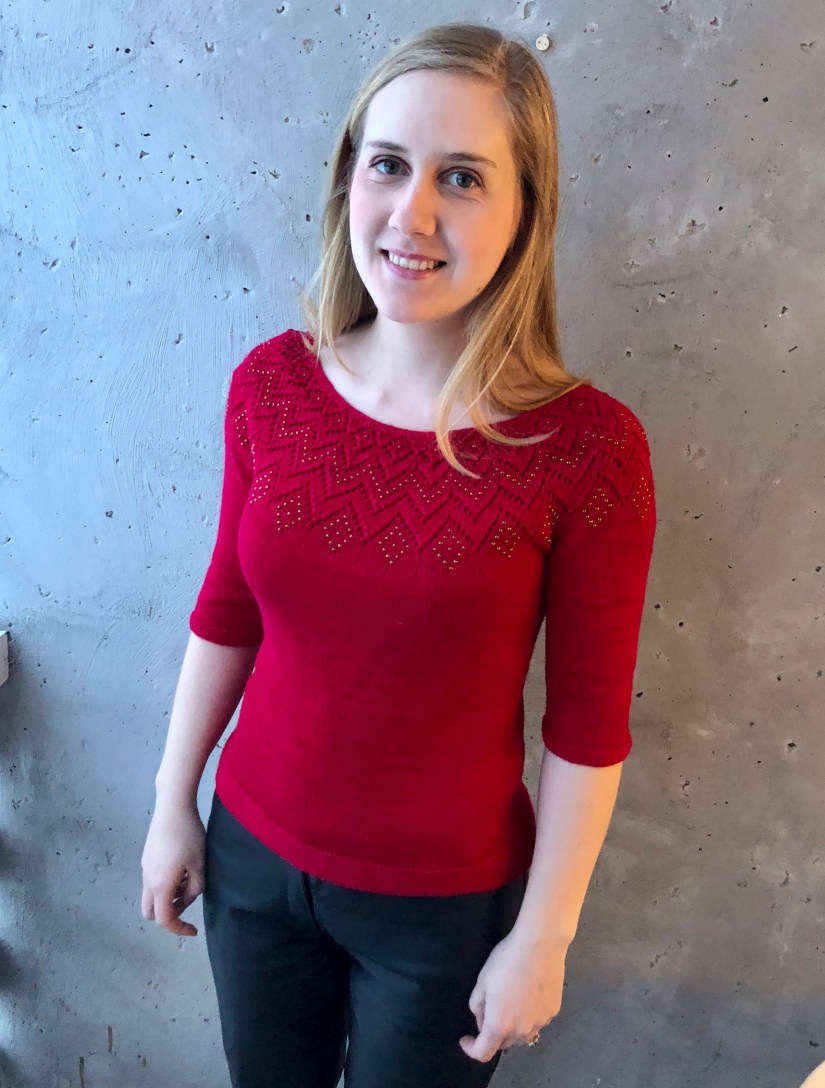
Knitted Luella Top with beads!

This knitting project has been a long time coming.  It was on my needles since August 2017!

fullsizeoutput_5ba9

Details

Pattern: Luella Top by Suzie Sparkles

Yarn: Wollmeise Lace yarn

My notes available on Ravelry here

fullsizeoutput_5bab

I bought this yarn at the Oslo Knitting Festival in October, 2016.  It was a 300g laceweight skein, which was a one-of-a-kind.  For this top, I held the yarn double as it’s written for a sock-weight yarn.  As a result, this whole top was one big game of yarn chicken!fullsizeoutput_5bac

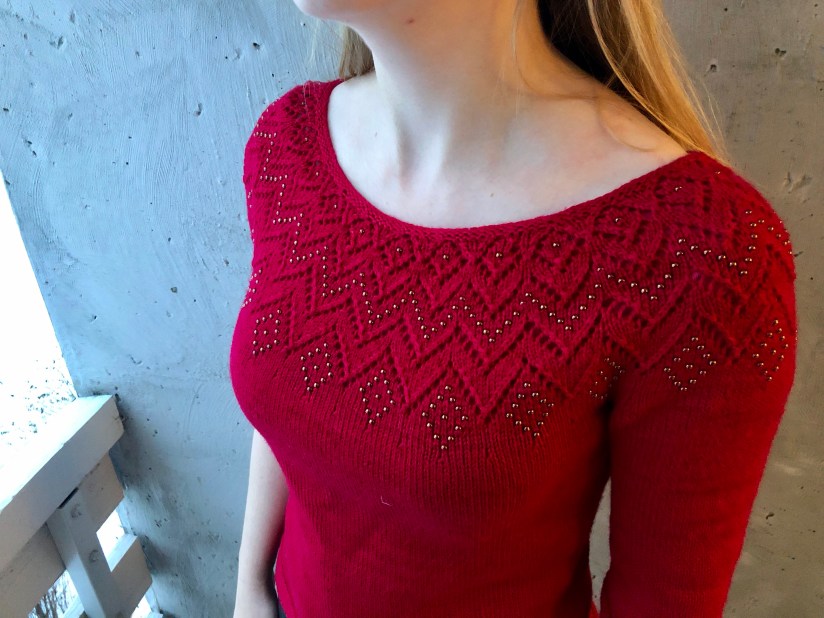
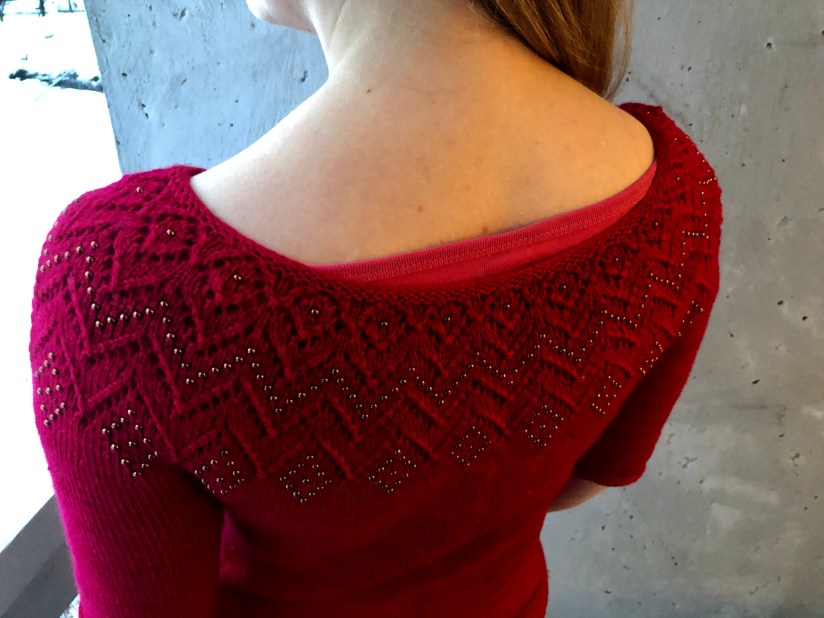
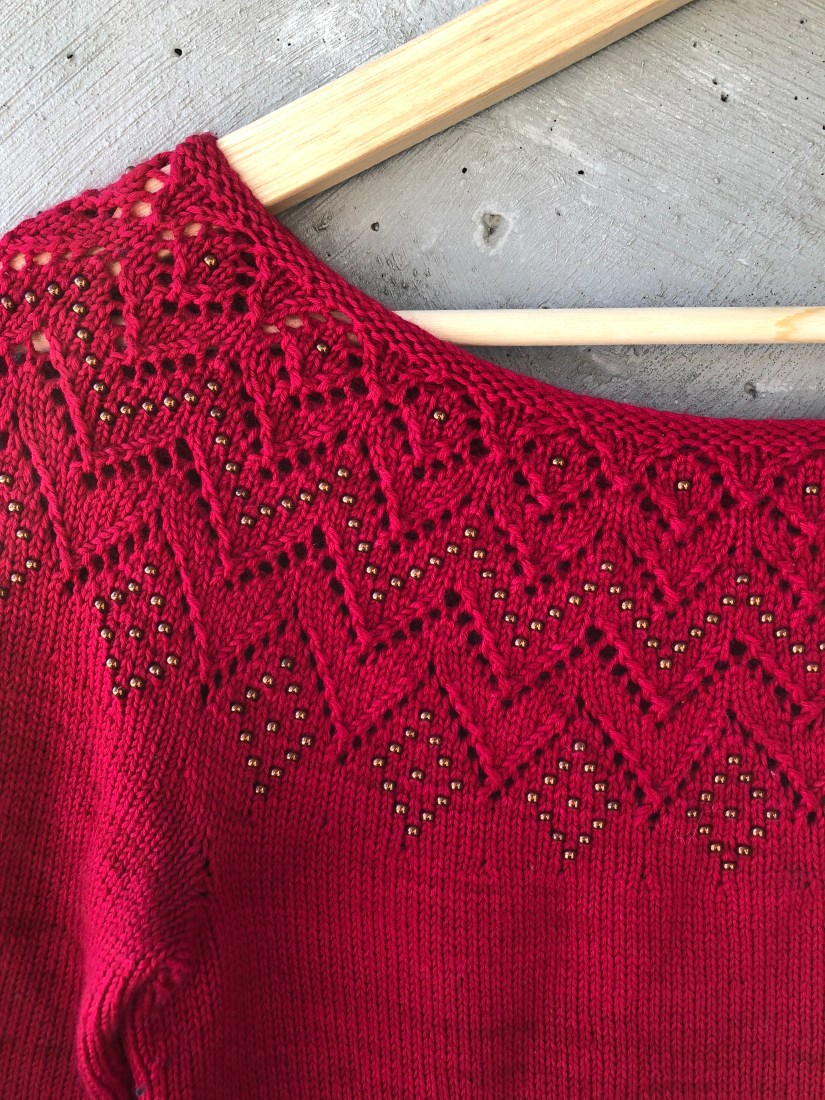
The pattern itself is very straightforward, a top-down round-yoke jumper which is the same back and front.  That’s nice, as I don’t need to worry about which way to put it on!  Of course the biggest change I made was to add beads into the lace yoke instead of the bobbles that the pattern calls for.  I guess this saved me some yardage which was added to the bottom of the jumper!  Initially I bought one packet of 125 beads thinking it would be plenty… I waws wrong! This jumper required about 500 beads and I had none left at the end!IMG_0459

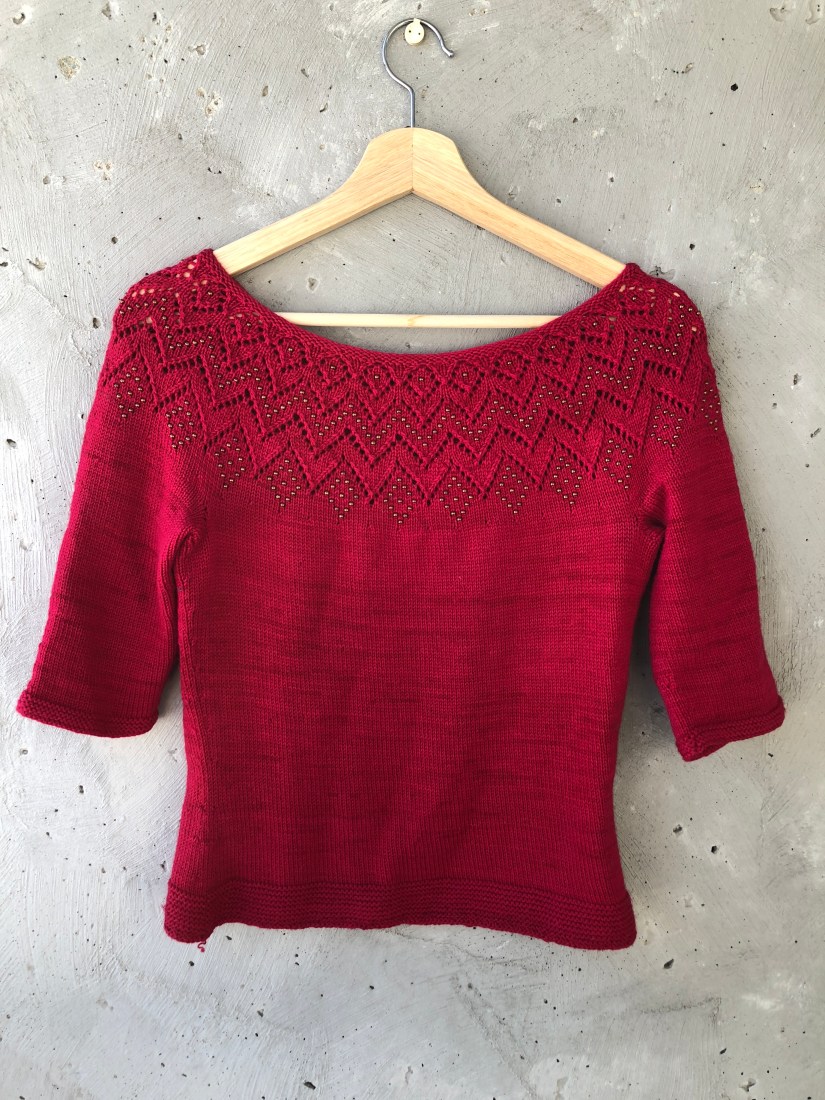
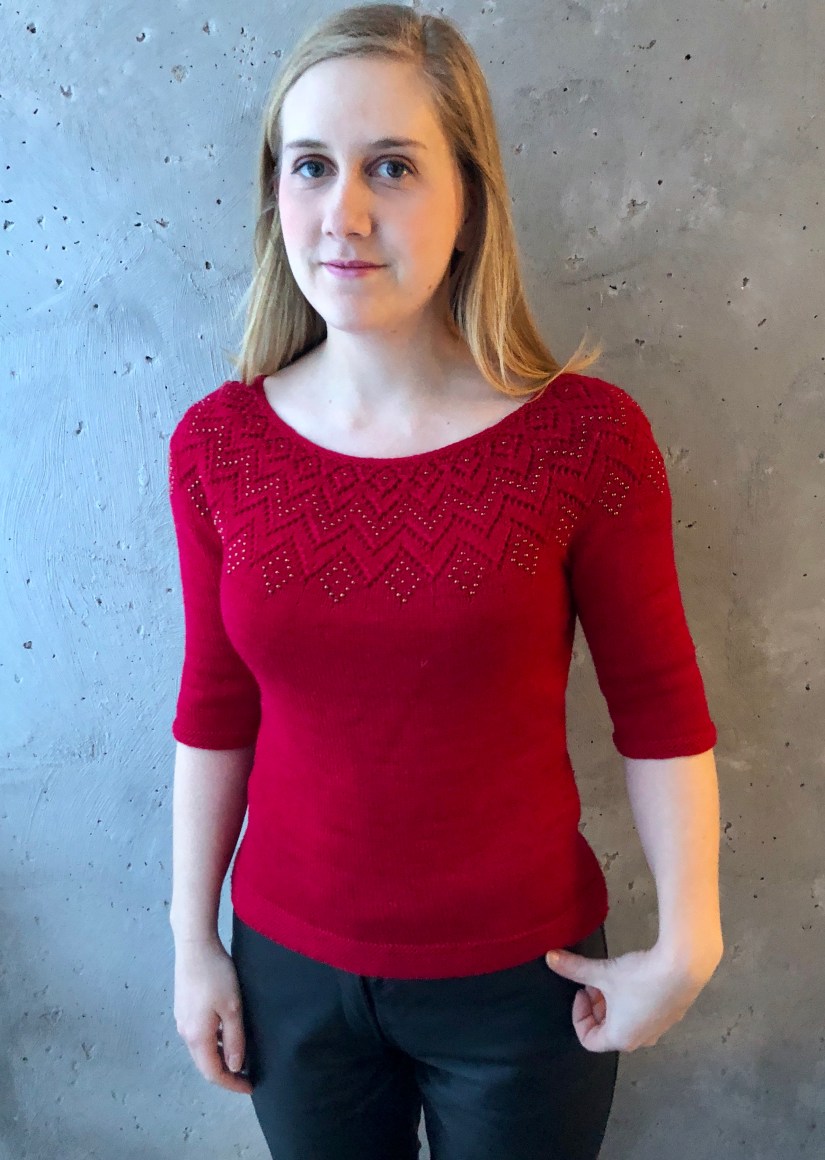
This picture kind of looks like it has and ombre effect but it doesn’t seem to in real life.  If I’d had more yarn I would have made the top a bit longer in both the body and the sleeves.  As it is, it hits me right at the elbow and the hip.  It works fine with mid-rise pants but I would have liked it a bit longer. I used every scrap of yarn, even the swatch!IMG_0460

The yarn itself is very smooth and feels almost like cotton, although it is 100% wool.  It was really lovely to knit with and feels smooth and soft against the skin.  Before it was blocked the fabric felt a bit stiff, but after blocking it’s got a lovely drape and handle.fullsizeoutput_5ba8

I highly recommend this pattern if you’re looking for a simple top-down top, with a bit of lace interest.  It would look beautiful with bobbles too.  The pattern would be a good basis for a plain jumper too, if you left off the lace!  I’m looking forward to wearing this top once the weather warms up a bit.  Right now it’s still too cold in Norway to even contemplate!

design, knitting, shawl

Rose Garden Shawl pattern – now available!

I’m finally releasing my shawl pattern!  I’ve been working on this for over a month now, knitting and editing and thinking.
For this month only, the pattern is available for $5 instead of the usual $6.  If you add it to your cart on Ravelry, the discount will automatically be added.  
My pattern includes charts and written-out instructions, so you can follow it any way you like.  The lace is fairly simple and can be memorised in no time!
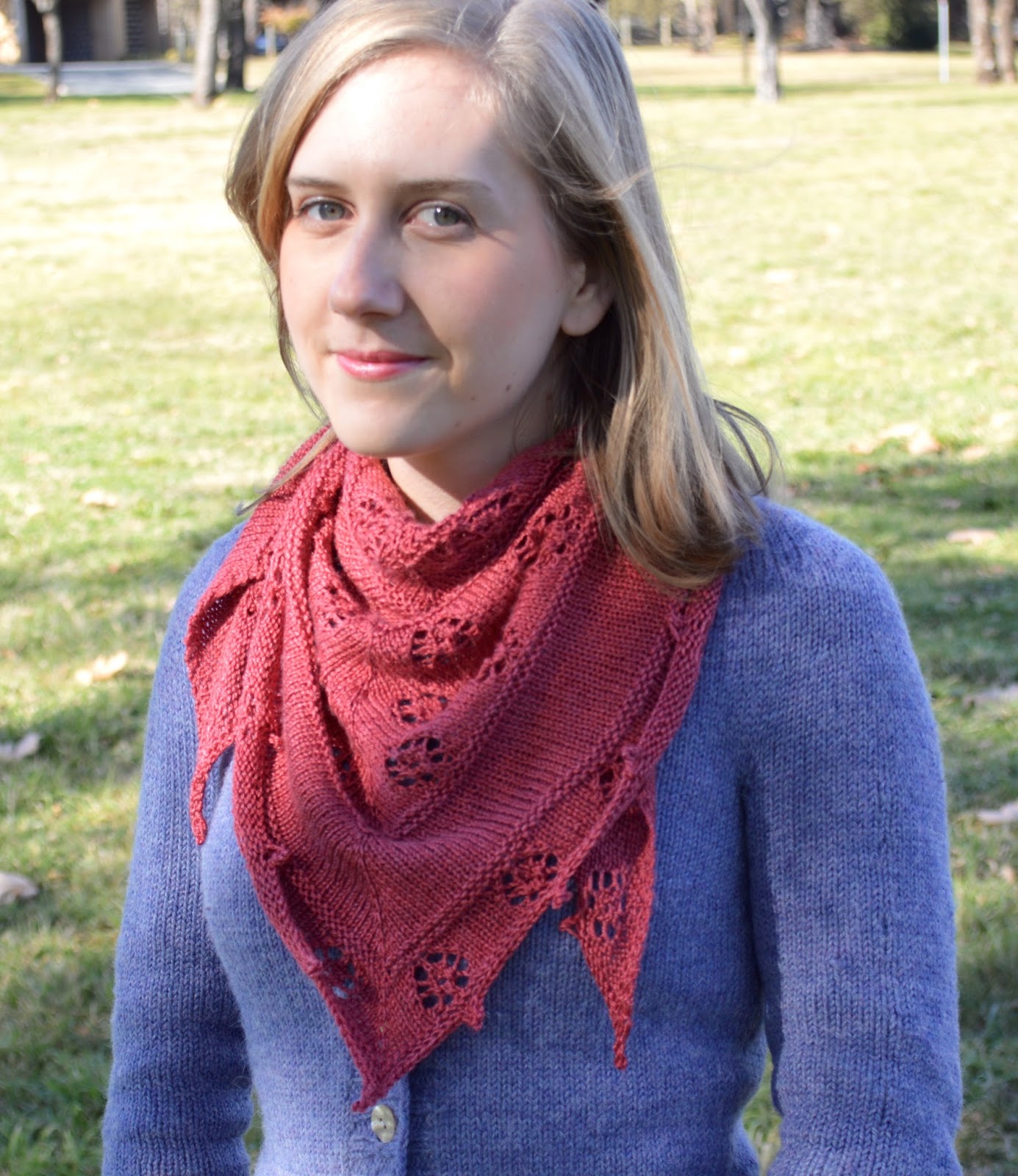
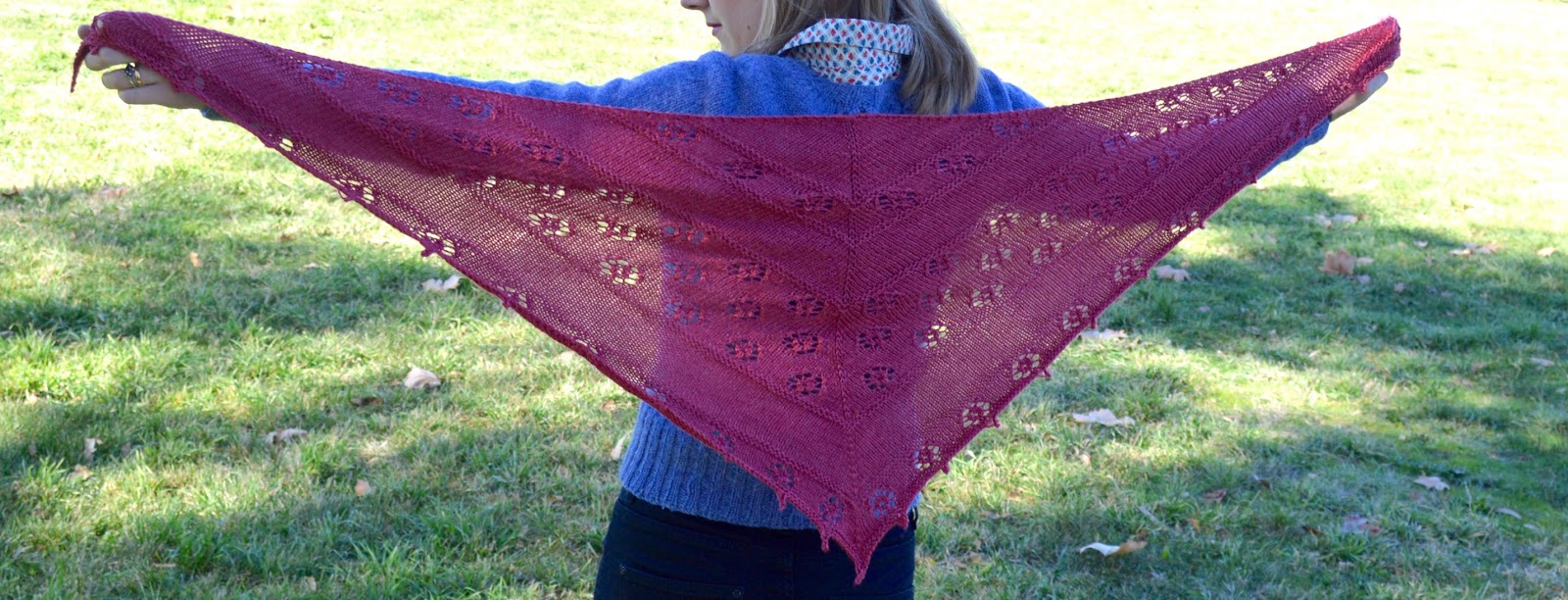
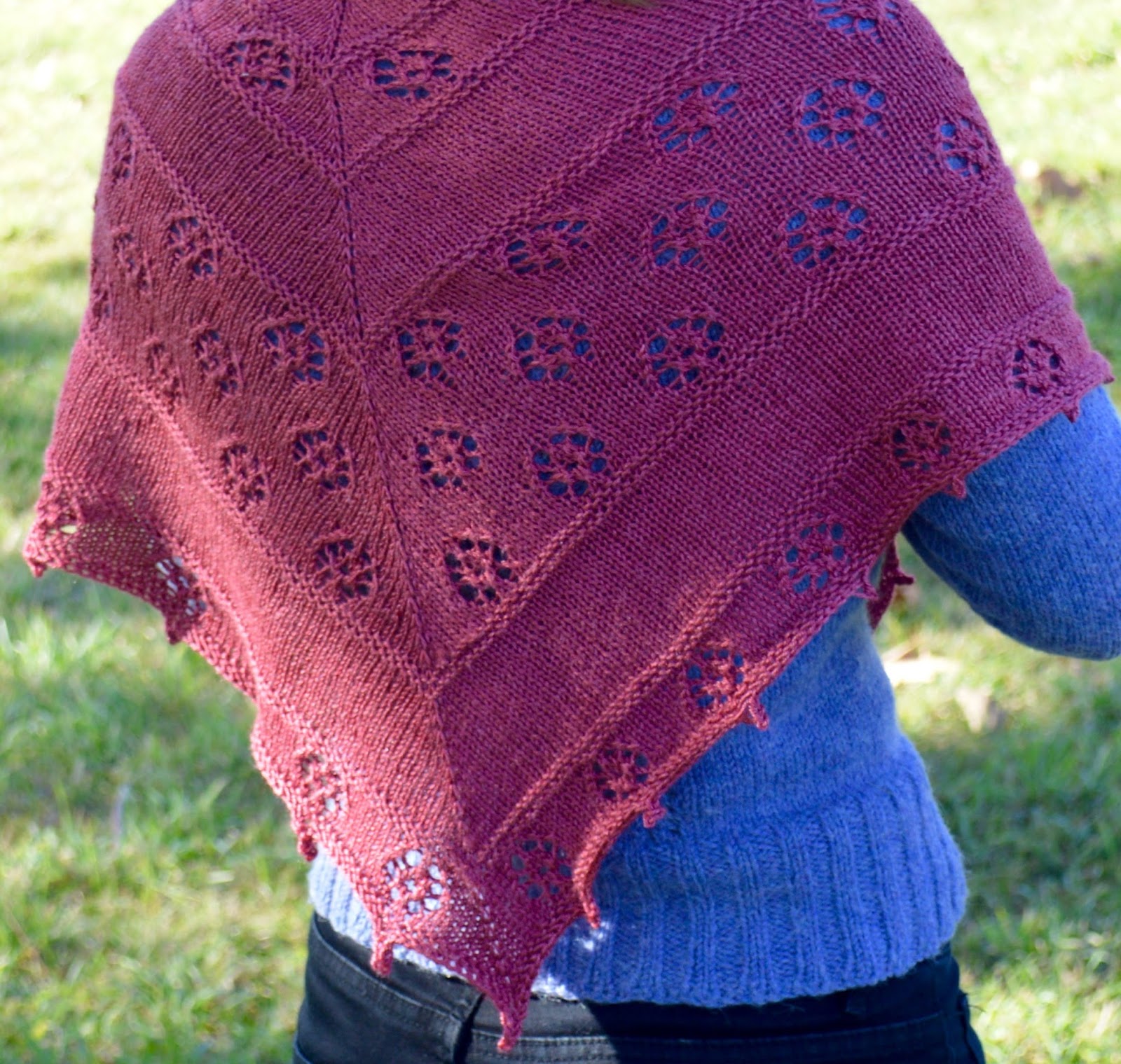
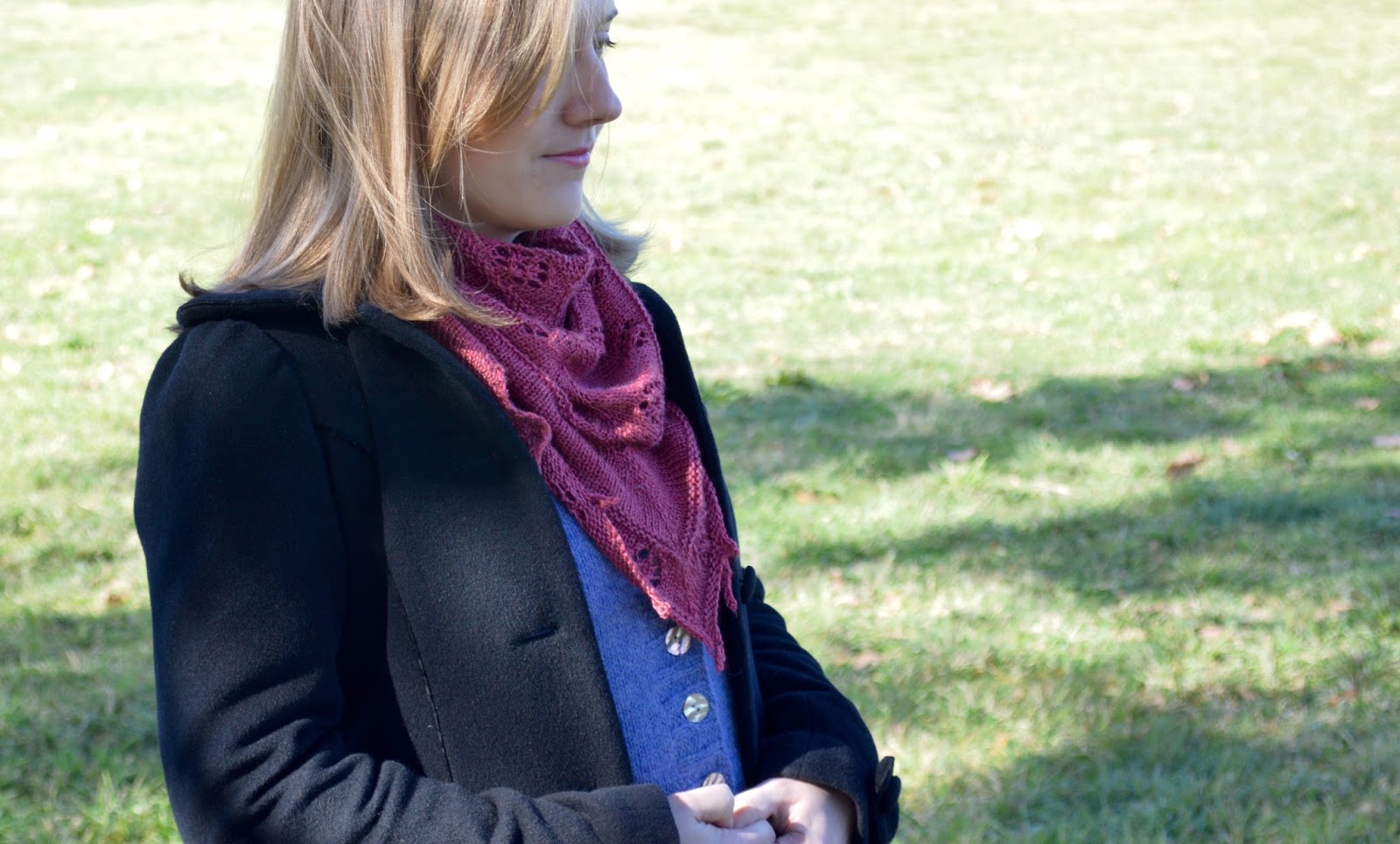
As you can see, it has little flower patterns making a little rose garden!
I love this shawl, it’s just the right size to tuck into a coat.
 Thank you for your support!

colourwork, knitting

How to make colourwork patterns using Excel

How to use Microsoft Excel to create colourwork for existing patterns
and
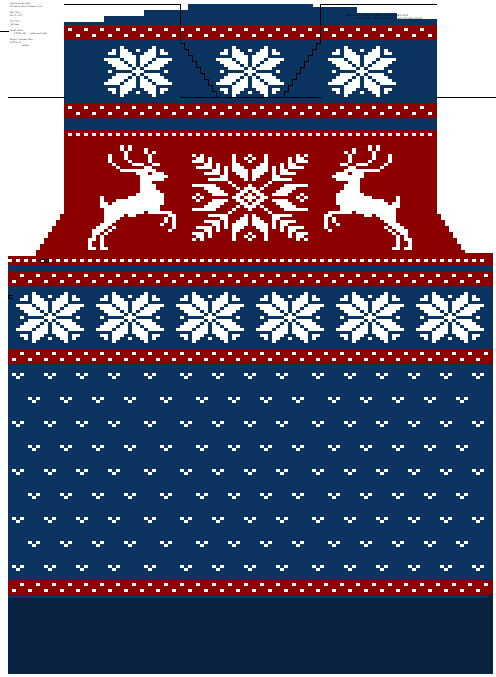
“Christmas Jumper” charts
 
After the popularity of the Christmas Jumper I made, I decided to share my process.  Many people on Ravelry asked me to share my pattern – however I used a commercial pattern for the construction and only originally created the colourwork.
In this tutorial I will show how to put your own unique colourwork designs on an existing jumper pattern, using Microsoft Excel.
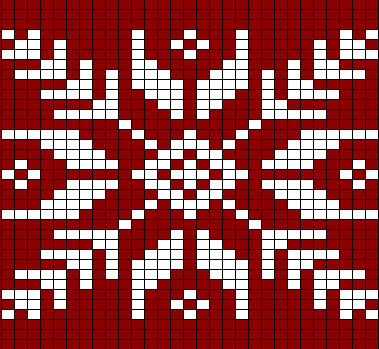
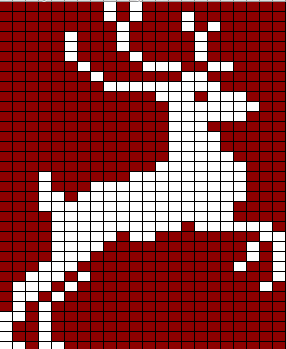
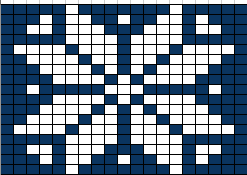
For those wanting some charts from my Christmas Jumper, they follow after the tutorial.  You will need to space these charts to fit your unique stitch count.
Before we begin, you will need a pattern to draw up.  I have chosen a free women’s sweater pattern from Rowan as an example, and will take you through the entire process.  You should use a pattern you have with the shaping you like.
This is easiest with a set-in sleeve pattern as you don’t need to worry about raglan or round yoke decreases.  It’s also best to have side shaping (if any shaping) instead of darted shaping. It creates nice flat canvas for colourwork.
One disadvantage of using this kind of pattern is that you usually have to work it flat, whereas colourwork is easier in the round.  You can always convert flat patterns to round, but will need to steek the sleeve holes (an advanced technique I won’t go into here).  For this example, I will colour in a set-in sleeve pattern with the intention of doing stranded colourwork on the knit and purl sides of the fabric.
My size is XS so this tutorial will be in that size.
Let the tutorial begin!
First open up Excel and make all the cells square.  Do this by selecting all (command a) and dragging the vertical cell wall to make a square.
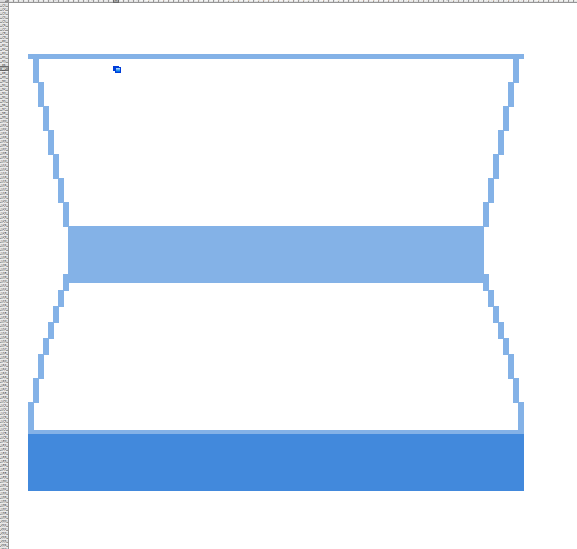
Now we need to make an outline of the pattern on the spreadsheet.  Go down the page quite a lot (if your pattern is bottom-up like mine) and a few squares in from the edge.  Check to see how many stitches to cast on, and colour in a row of that many squares.  Colour in by highlighting the squares and clicking on the “fill” button.  For me, it is 99 stitches.
The first section is usually rib, which I like to make a darker colour so I remember later not to colour it.  In my case, I work 14 rows in rib.  So I’ll drag up from the 99 stitches 14 rows and colour that whole block.  So far you’ve got a rectangle.
Now we get to outline the sweater.  Following the shaping (if you have any), outline the edges of the sweater.  For me, I am supposed to knit 8 rows and then decrease on each side, and then every 6 rows, and then every 4 rows.  Then it increases again.
Sometimes you will come across something like “Knit until piece measures -cm from cast on edge”.  This is when you’ve got to look at your gauge and figure out the maths!  Mine says “continue straight until back measures 38cm from cast on edge”.
First, look at your row gauge.  Mine is 32 rows to 10cm.  So there’s 3.2 rows in 1cm.  3.2 x 38cm = 121.6 (let’s call it 122).  I’ve already done 109 rows from the cast on edge, so there’s only 13 rows to go.  Draw them in.
Now usually you have to decrease for the armholes.  Just like in the waist shaping, draw it in.  Continue until the cast off edge.
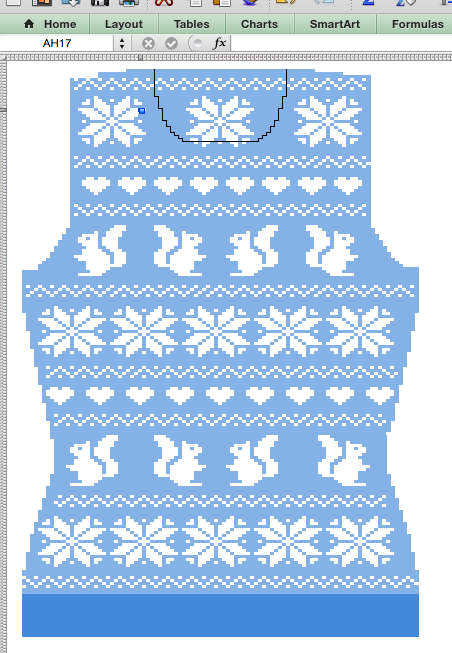
For most standard set-in sleeve jumpers the front and the back are very similar.  For mine, it only begins differing at the neckline. Rather than make a whole new drawing for the front, I use “borders” on the cells to outline where the front is different from the back.  Just following the outline like we did with the rest of the sweater.  This means that your front and back will have identical colourwork (except for the top middle which will be absent in the front).
I didn’t do it here, but it can be helpful to draw a line down the centre.  This just helps you keep the patterns symmetrical.
Now is the fun part! Colouring in!  Start experimenting with different geometric designs.  Good resources are cross stitch charts, existing fair isle patterns, and pixel art. Simple little bands are easy to make, you only need two or three rows to make them effective.  Snowflakes are a bit trickier, so you might want to look something up and copy it.
Keep in mind that you don’t want too many stitches before changing colour. If you leave one colour too long your floats can become unweildly or tight.
For my example, I used hearts, snowflakes, squirrels, and a pretty border pattern.  I love the way it ended up!
When repeating a pattern across the jumper, you need to keep the design centred.  This means that when the stitch count is different (e.g. at the waist shaping) you may need to adjust the spacing between the motifs.  My two rows of squirrels are spaced differently to keep them centred.
Sleeves can be lovely with full colourwork, but I prefer sleeves with only a little colourwork.  If I were to knit this I would put the border pattern or hearts motif just after the cuff ribbing on the sleeves and leave the rest of the sleeves blank.
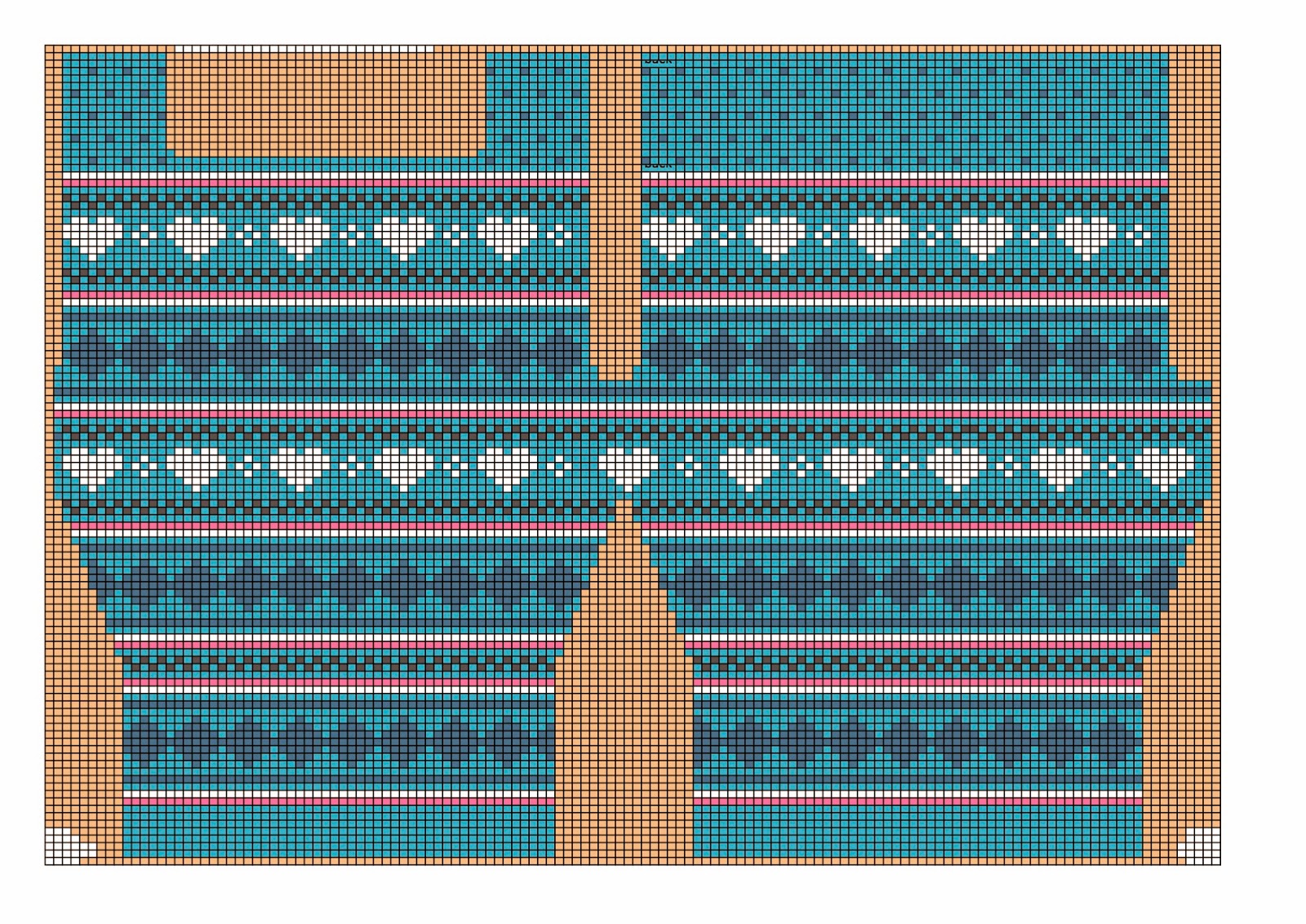
A great thing about making this outline of the pattern is that you don’t need to read the pattern.  All of your shaping is worked into the chart. This chart is all you need!


Please check out my Ravelry page and my designs on Ravelry:

Christmas Jumper charts!

colourwork, jumper, knitting

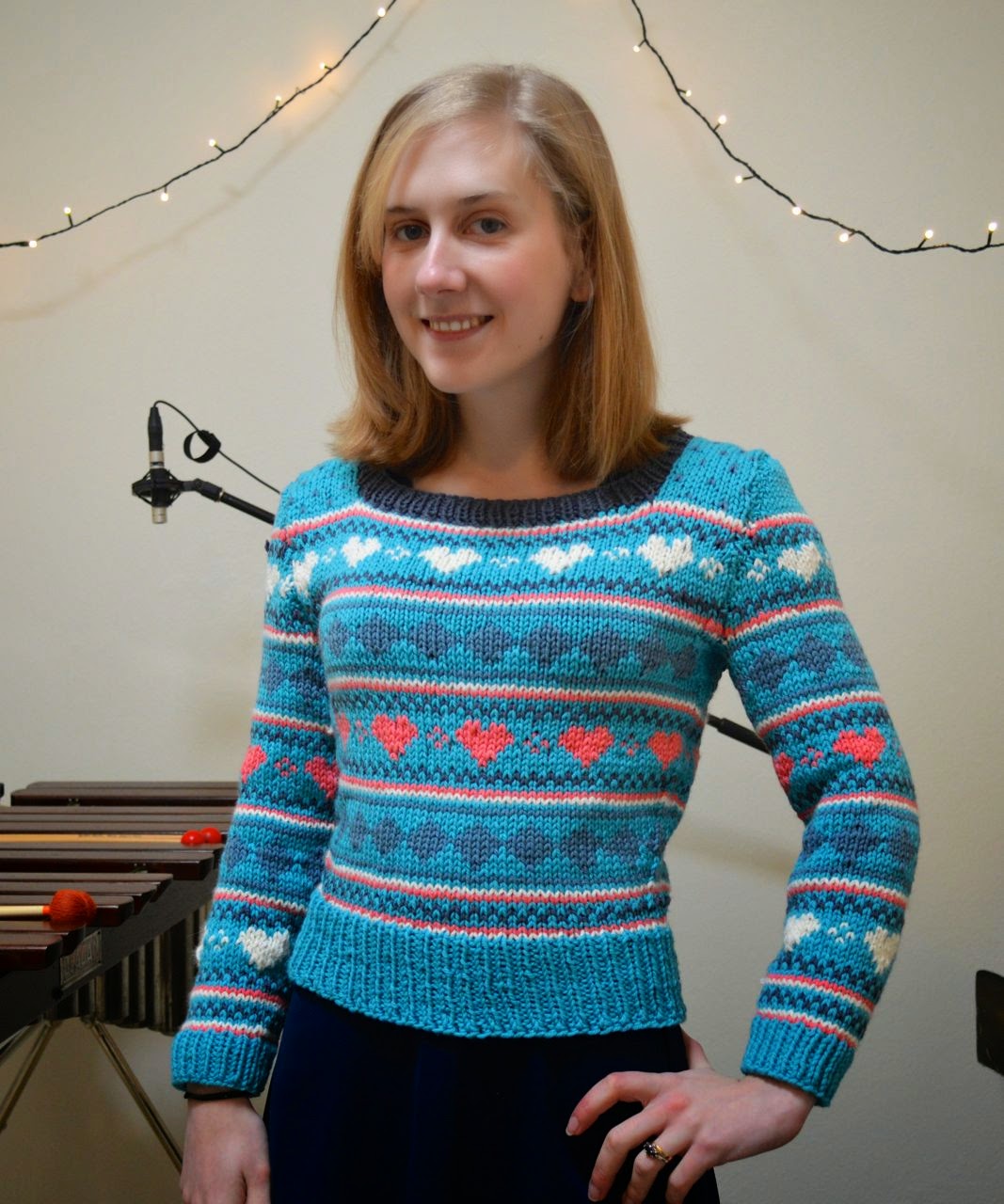
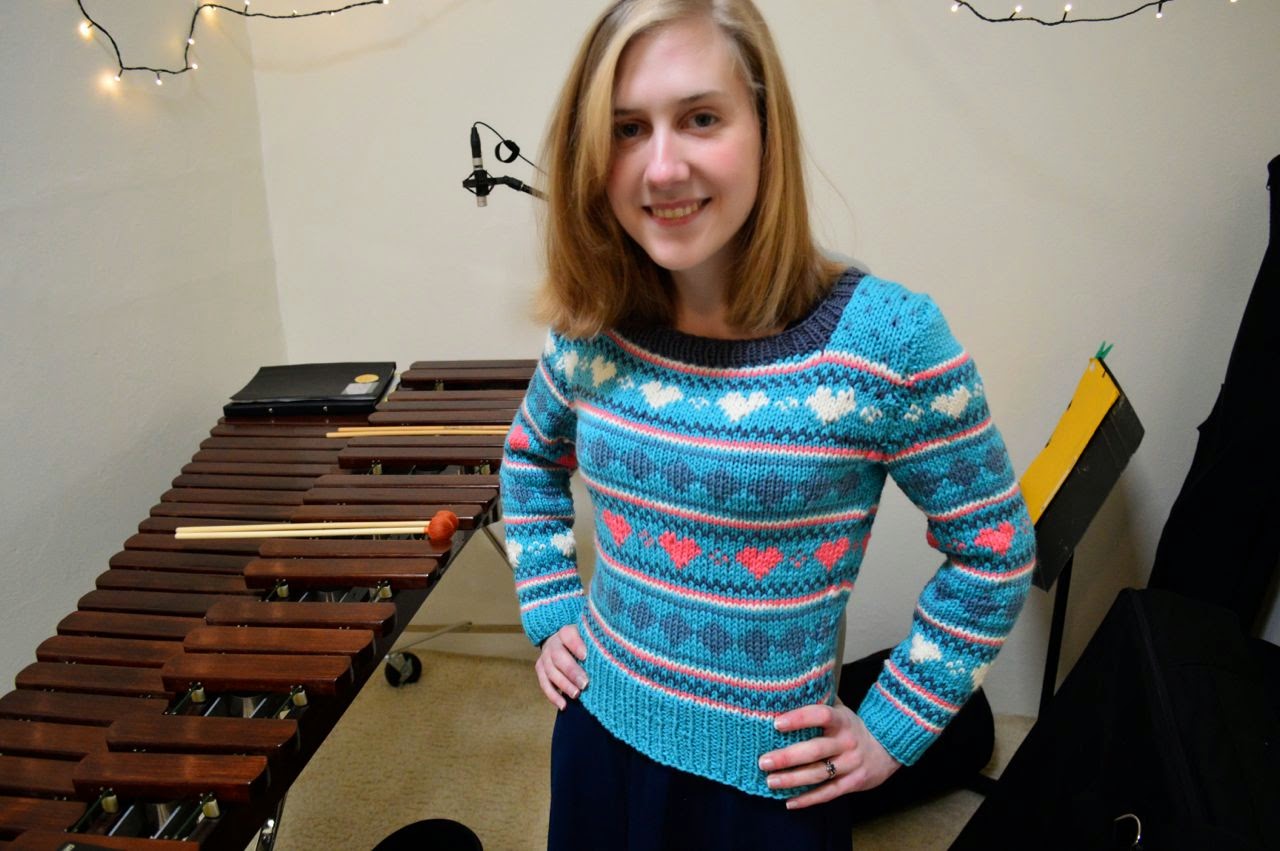
Completed – Colourwork jumper!

This knit was lightening fast you guys!  It took me a week!  A WEEK!  It would have taken 6 days but I fell into some difficulties…
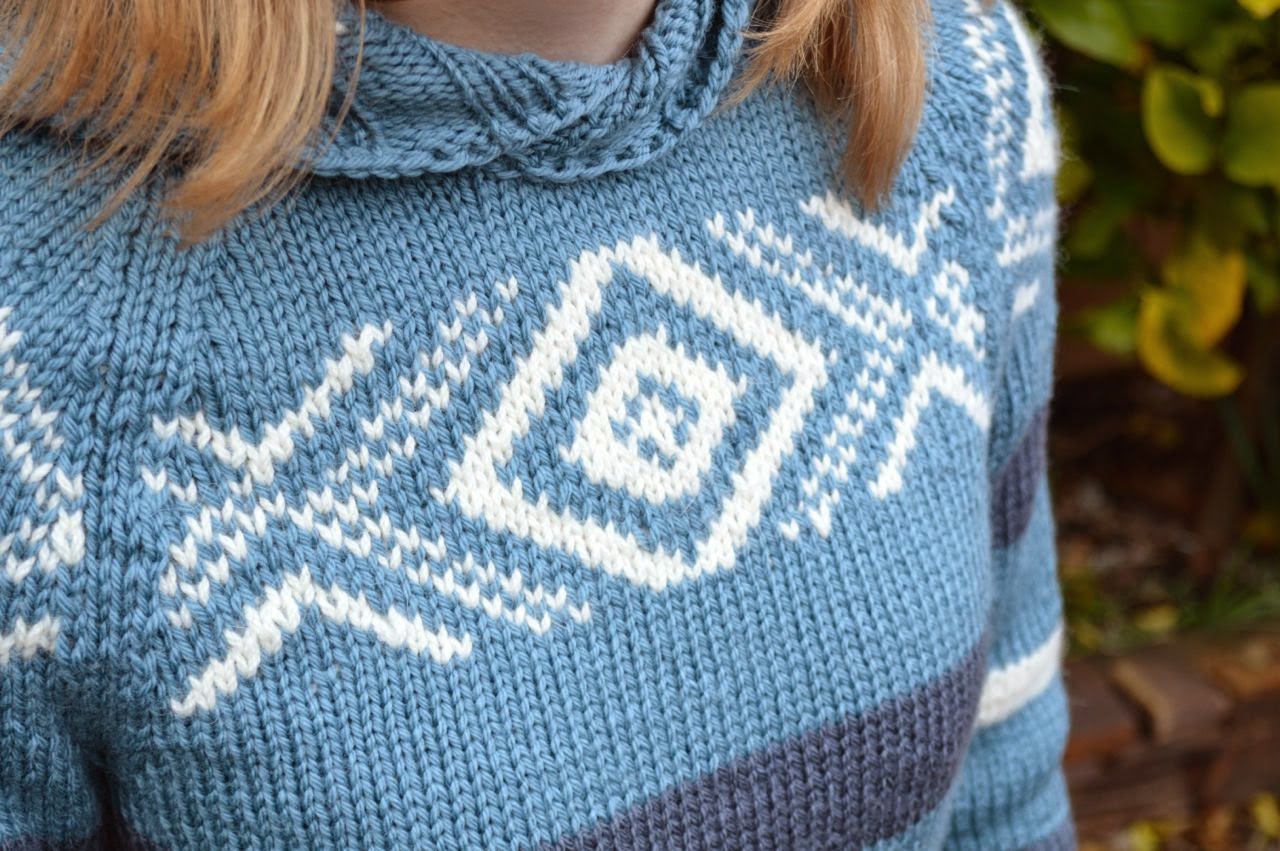
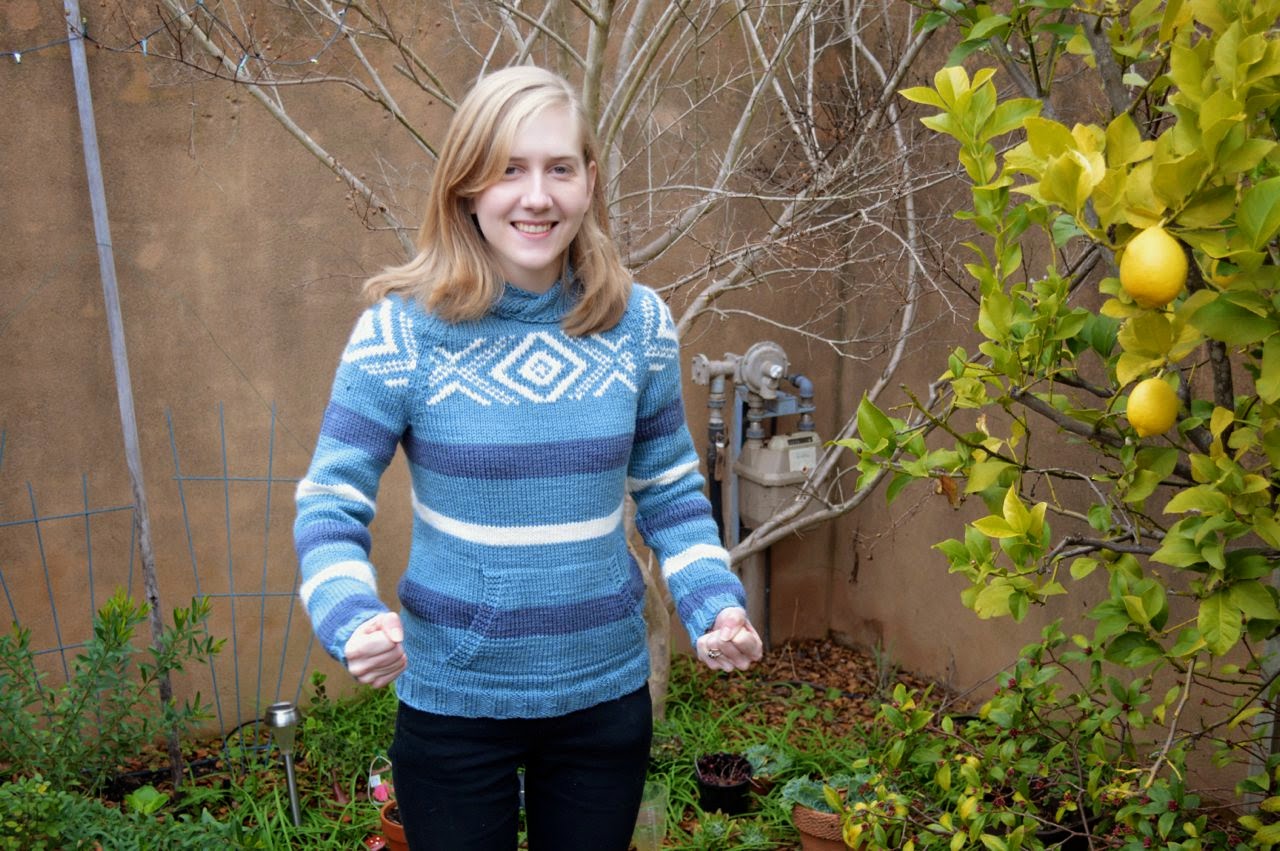
Wool: Bendigo Woollen Mills Luxury 10ply in Lotus, Aquarium, Slate, etc.
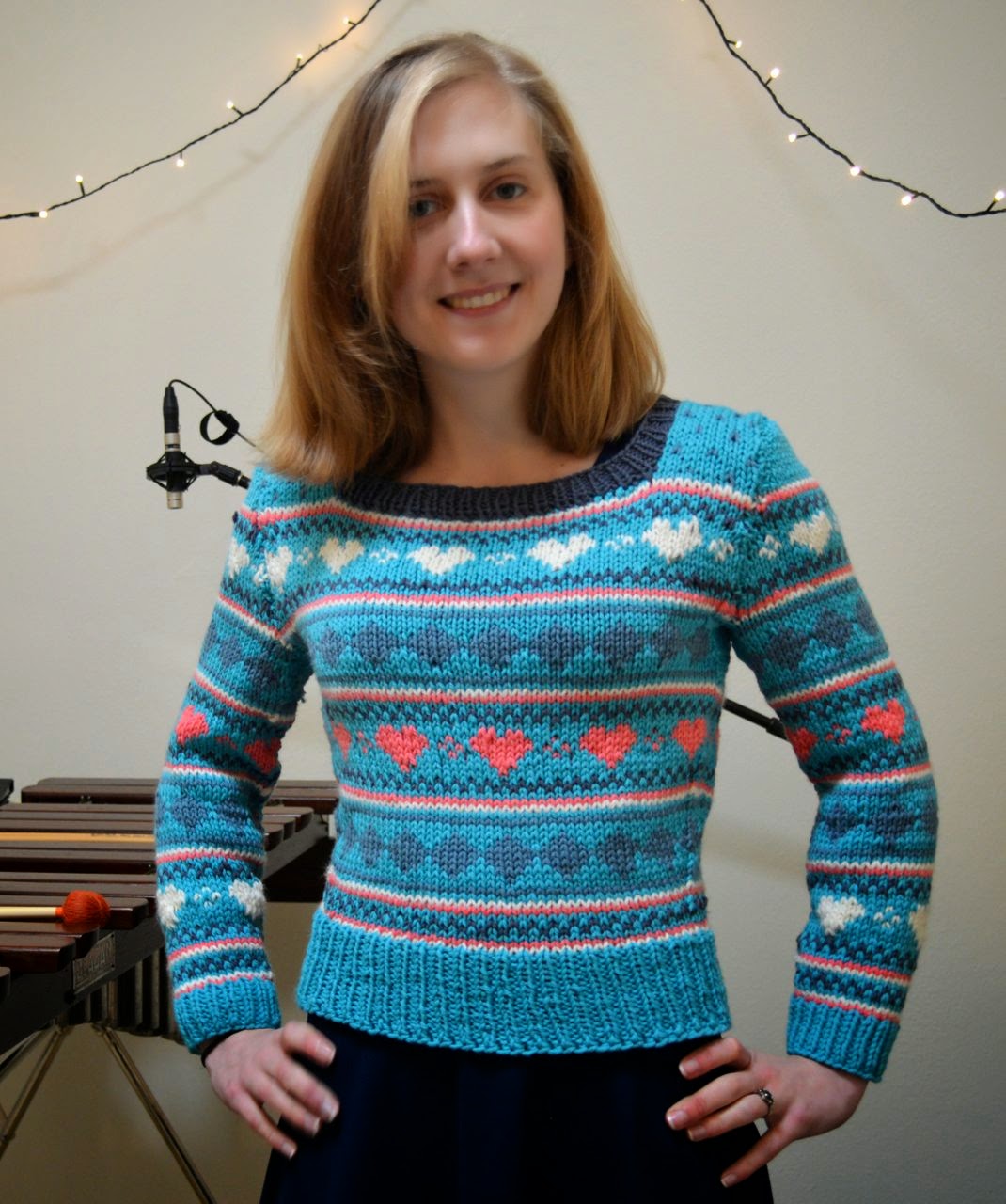
This pattern doesn’t actually have hearts and diamonds and stripes and spots on it.  I made that part up!  I took the basic sweater instructions and made myself an Excel spreadsheet outline (making all the boxes square).  Then I basically… coloured in!  Making sure all the stripes lined up, and there weren’t more than 2 colours in a row.
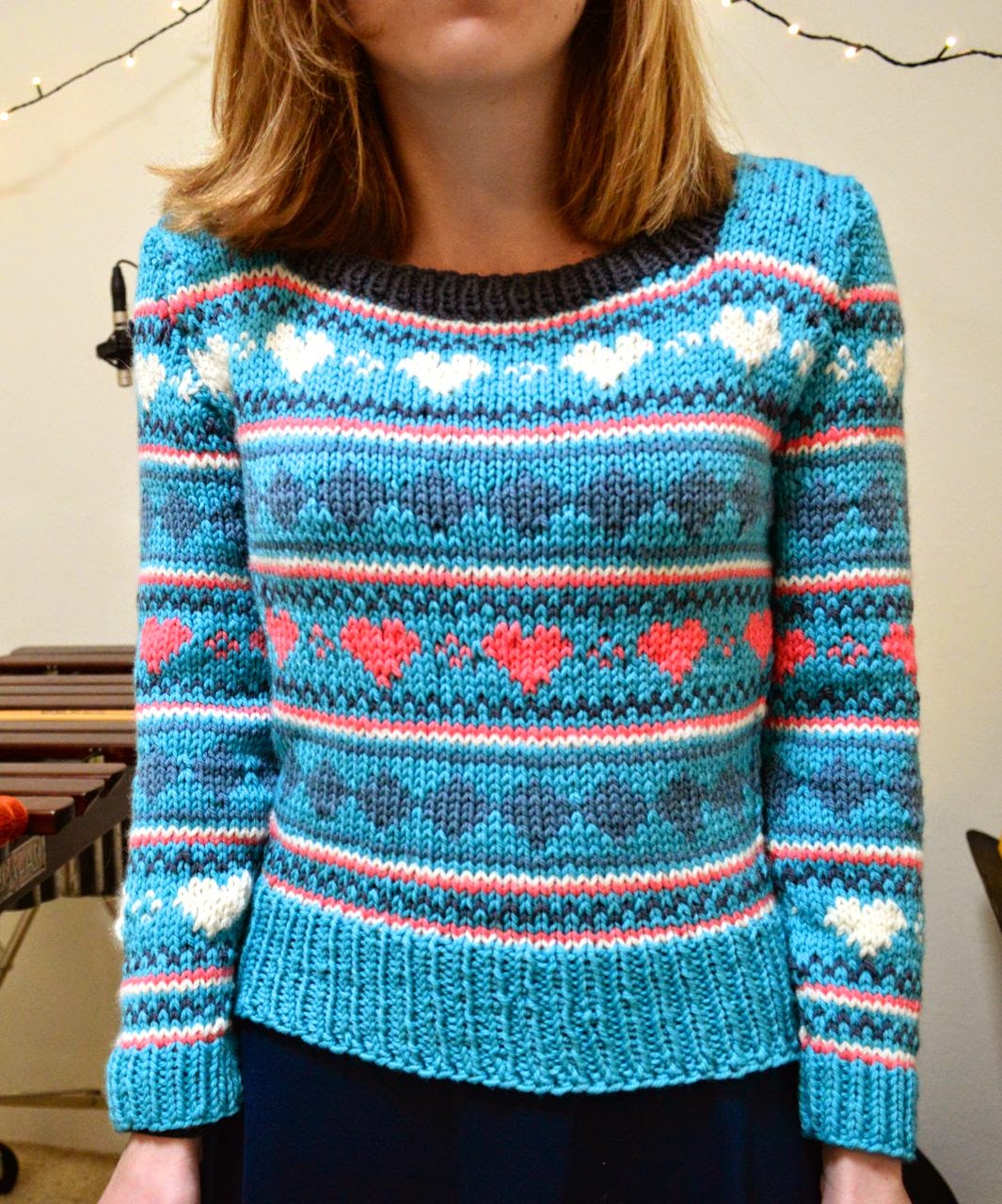
I obviously made some changes from my design, and that was because I almost ran out of white! So pink hearts made an appearance. If I were to do a similar thing again, I’d make sure the hearts ran across the bust line, because they’re prettier than diamonds. 

 I made sure all the stripes lined up over the sleeves too.  I changed the sleeve construction by doing them flat and then seaming them into the armhole, instead of doing the short rows.  I just couldn’t face colourwork with 4 needles!  This photo is to show the colours lining up:
 When I sewed in the sleeves I discovered that the armhole was hanging way too low.  It made the sleeve kind of weird and low and tight under my arm.  So I took the sleeves off again and made a kind of gusset to fill in the space.  I did this by picking up stitches from the underarm and knitting up, and doing the same to the sleeve so I didn’t have weird excess fabric.  It worked out perfectly, and you can’t see unless I show you!  I think it’s because my gauge is so loose that it ended up so long.  The original design looks cropped, and mine does not look cropped!
 Despite it being a little larger than the design, I like it because it doesn’t stretch the fair isle out of shape.  A loose jumper is much more snuggly too.  Don’t worry it does fit!  But Andi Satterlund’s designs are often made with 2″ of negative ease, and I think this has no ease.
What do you think?  Will you try making your own fair isle designs now?
jumper, knit, knitting

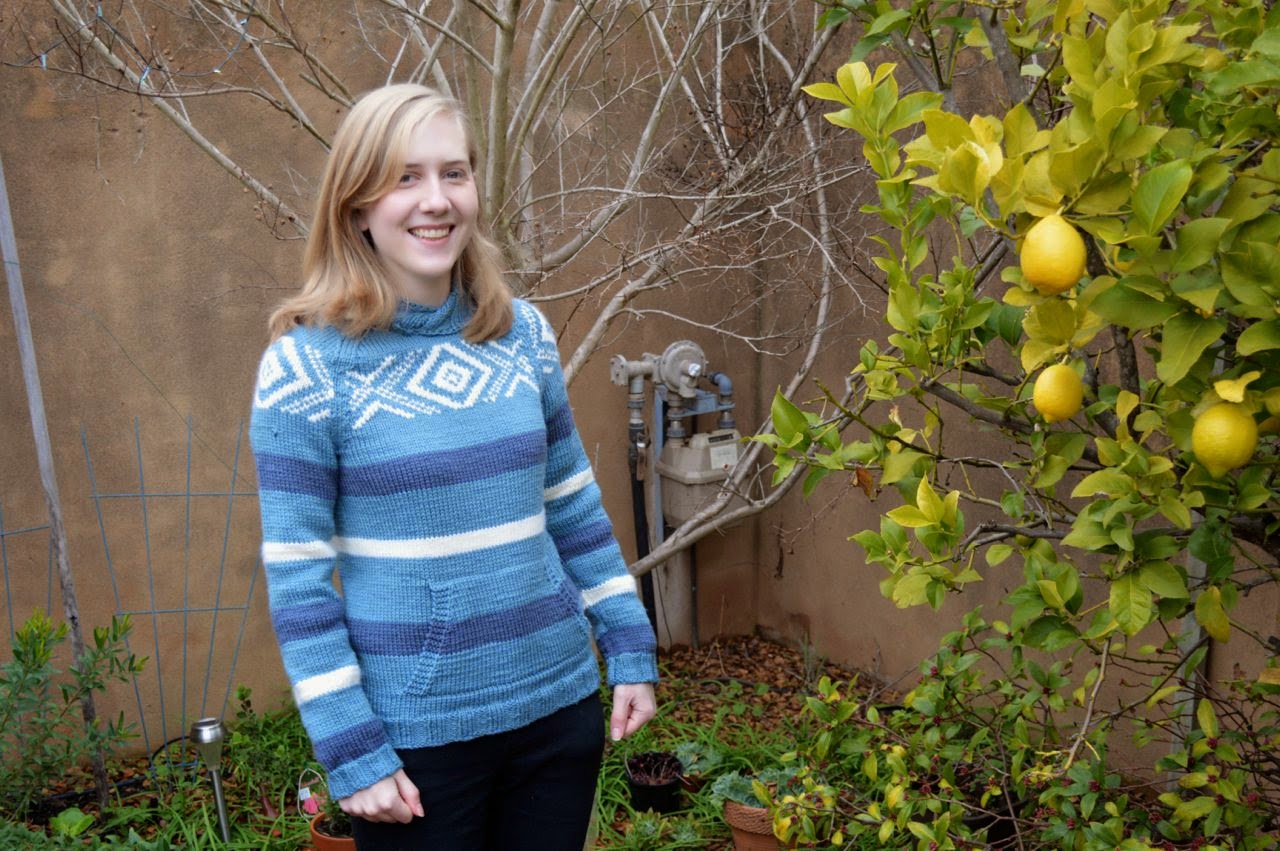
Completed – Shilshole hoodie!

This jumper is soooo comfy you guys.  It’s so comfy I’m laughing in this photo.
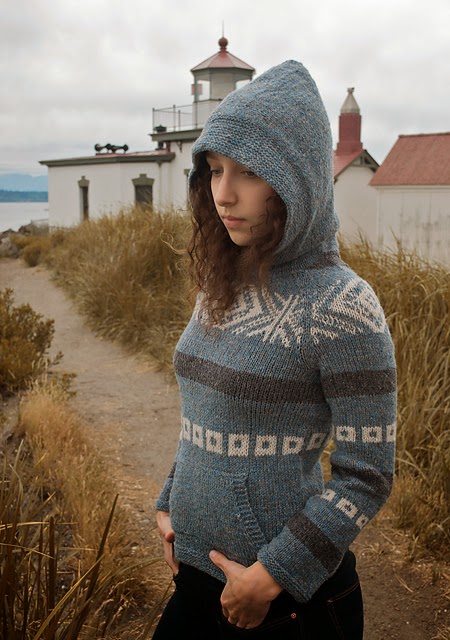
 I made a LOT of modifications to this pattern.  If you have a look at the original design, you’ll immediately see some of the changes I made.  For reference, here’s the pattern photo:
1. Instead of garter stitch, I used 3*3 rib everywhere applicable: the bottom band, the cuffs, and the hood edge.  I just don’t like how garter stitch looks.
2. I changed the sleeves to seamed (in the round sleeves drive me bonkers)
3. I changed the stripe pattern on the sleeves to match with the body
4. I didn’t do little white squares, I did a stripe (who has time for that)
5. I changed the yoke design slightly (to simplify)
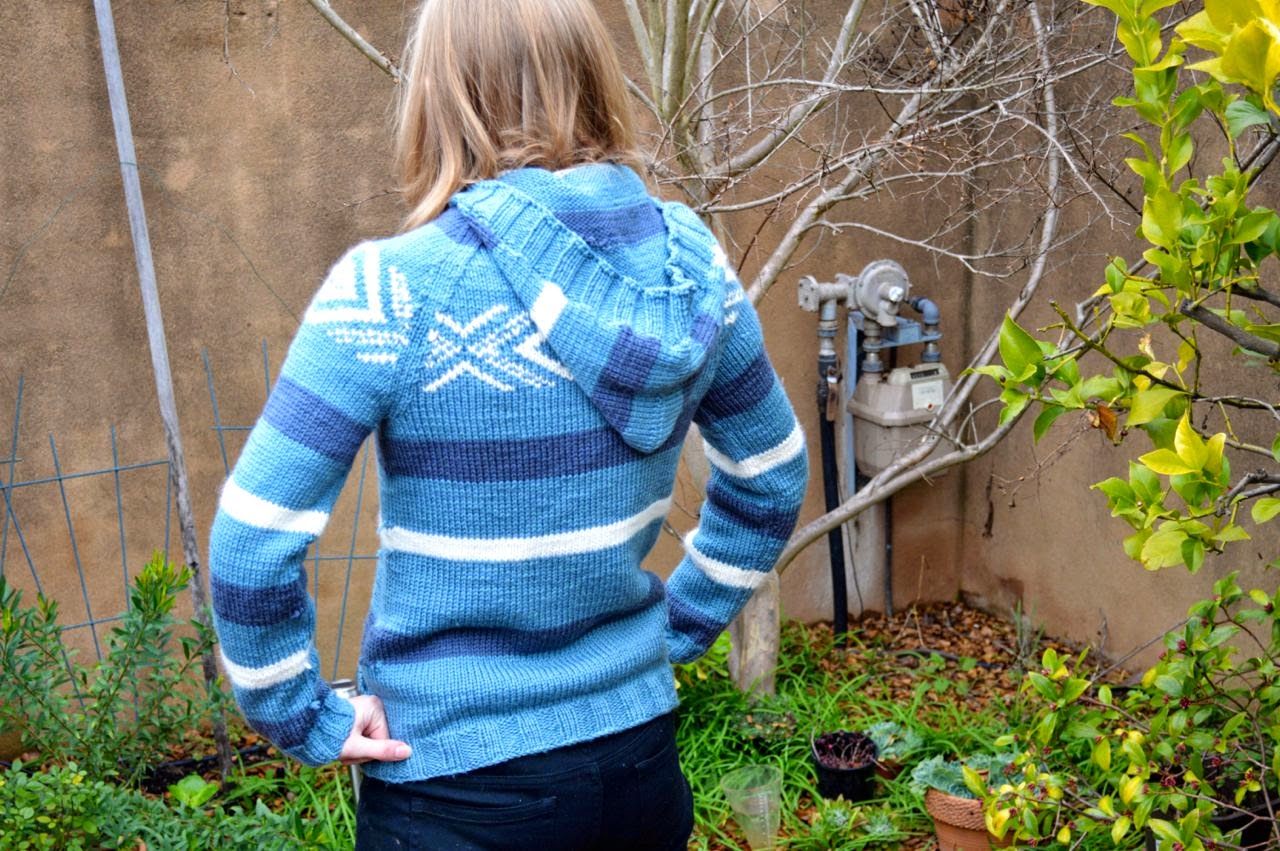
6. Did stripes on the hood istead of making it plain.
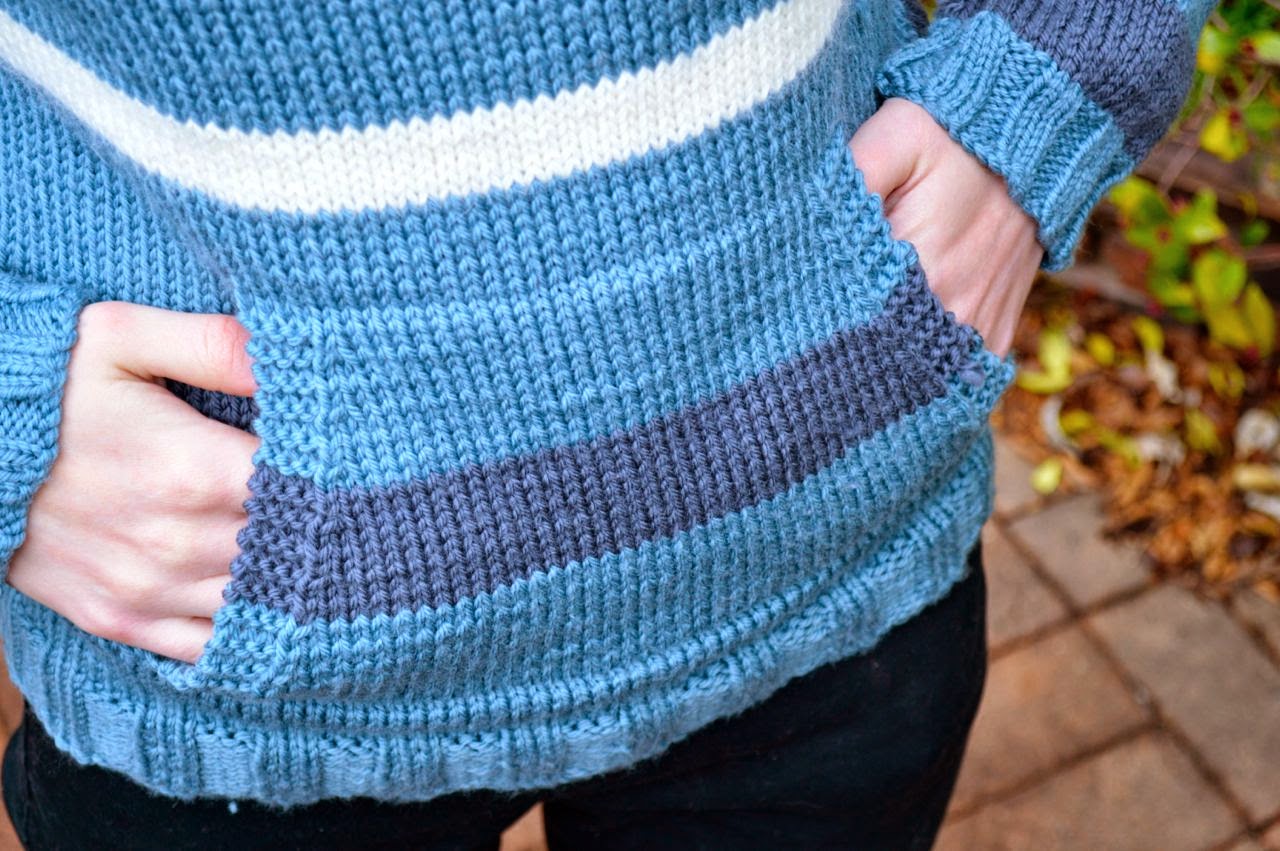
7. Added a stripe in to the pocket section.
Sleeves: I made up one as the pattern instructed and it was too long on my short arms.  This happens all the time.  So I worked out how many rows to take out, and then I wrote myself a new colour pattern so it matched the colours on the body.  You have to work down from the top so it matches properly.  My arms are longer than the body so there’s an extra grey and white stripe on the sleeves.  When I stand to attention they match!
This hood be POINTY!  But it’s cute now I’m used to it.  I really love the relaxed fit of this jumper, it’s so different from the usual style I’ve been making.  This is awesome because I can wear it over jeans and it’s so warm!
 The kangaroo pocket was fun to do – it was done by picking up stitches at the front using a lifeline, then knitting to the same length as the main front and then joining by knitting together.
 The raglan shaping was hard.  I just found the pattern really hard to follow somehow!  I’m not quite sure what went wrong but it was hard to follow.  I had to write it all out in longhand in order to get it right, and had to frog a few times.
I’m thinking of reverting back to Bendigo Woollen Mills Classic instead of luxury.  All my Luxury items are pilling beyond belief!  Although Classic is more scratchy, my Milena cardigan is still as new, whereas my Chuck jumper is already a world of pills.  I’d say I wear them about the same amount, so I might have to remake everything in Classic. But they don’t have 10ply!!!
I wore this jumper all weekend at the Arts and Crafts Show, got a billion compliments, and was super warm against the ridiculous weather.  It was sooo cold last weekend! But I was snuggy as anything in my beautiful new hoodie.  Two thumbs up!

As usual you can see more detailed notes and in-progress photos on my Ravelry page.  Thanks for looking!