fashion, life, mod, sewing

Refashioning a big t-shirt

I know there are heaps and heaps of tutorials on how to do this online… but I thought why not add to them!
As you know, I recently went to Sydney to see They Might Be Giants.  I bought a Flood t-shirt (a great album of theirs from 1990) but unfortunately they only had mens size large.  I am not a mens size large you guys!  I bought it with the intention of modifying it (or using it as a sleeping shirt).
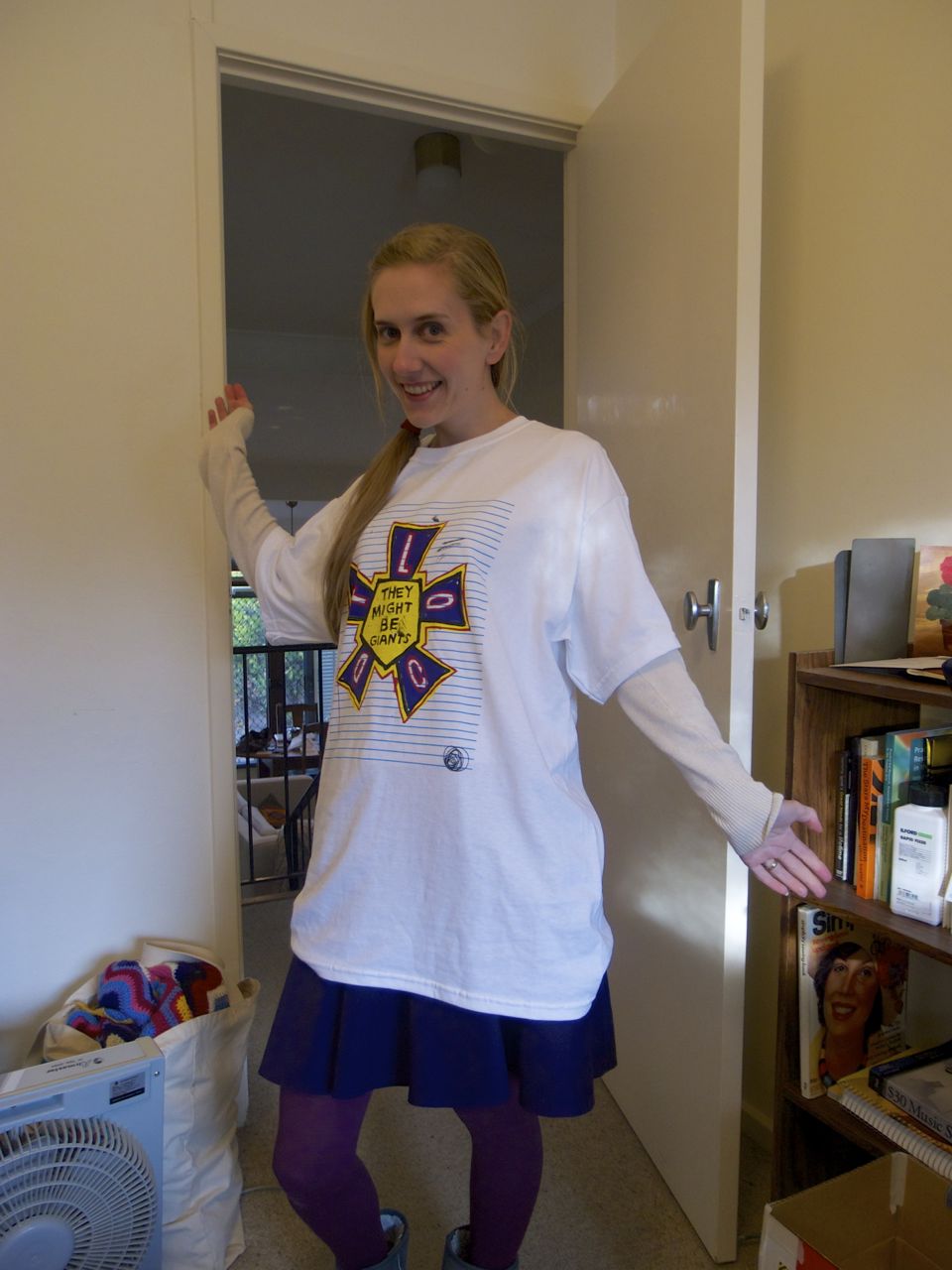
It is even too big to sleep in!  I can imagine myself rolling around in it and getting all twisted.  See how huge it is on me?
Let the tutorial commence.
First find a t-shirt that you DO like the fit of.  Just make sure that it doesn’t have raglan sleeves: that is, make sure the sleeves don’t join to the neckline.  This will be important later.
Iron your shirts and fold them in half lengthways.  Put your little t-shirt on top and trace around it.  Fold the sleeves inwards and trace around the curve where your armhole is.
Take away your little t-shirt and pin your big t-shirt so it doesn’t slip around.  Cut around where your drew the outline, through all 4 layers. Make sure you leave a 1.5cm seam allowance!!  Since my t-shirt was super long, I just extended the line to the bottom of the shirt – so it can be either a long shirt or a short dress.
Now open it out and pin up the sides, with the RIGHT SIDES FACING.  If you do it with the wrong sides facing you’ll end up with an inside-out looking tshirt.  Sew up the side seams but don’t sew up the armholes!

Try it on for size.  I was really happy with how this fit so I proceeded.  If you’re not happy, take it in a little more.  If it’s too small, you can still unpick and sew closer to the edges.
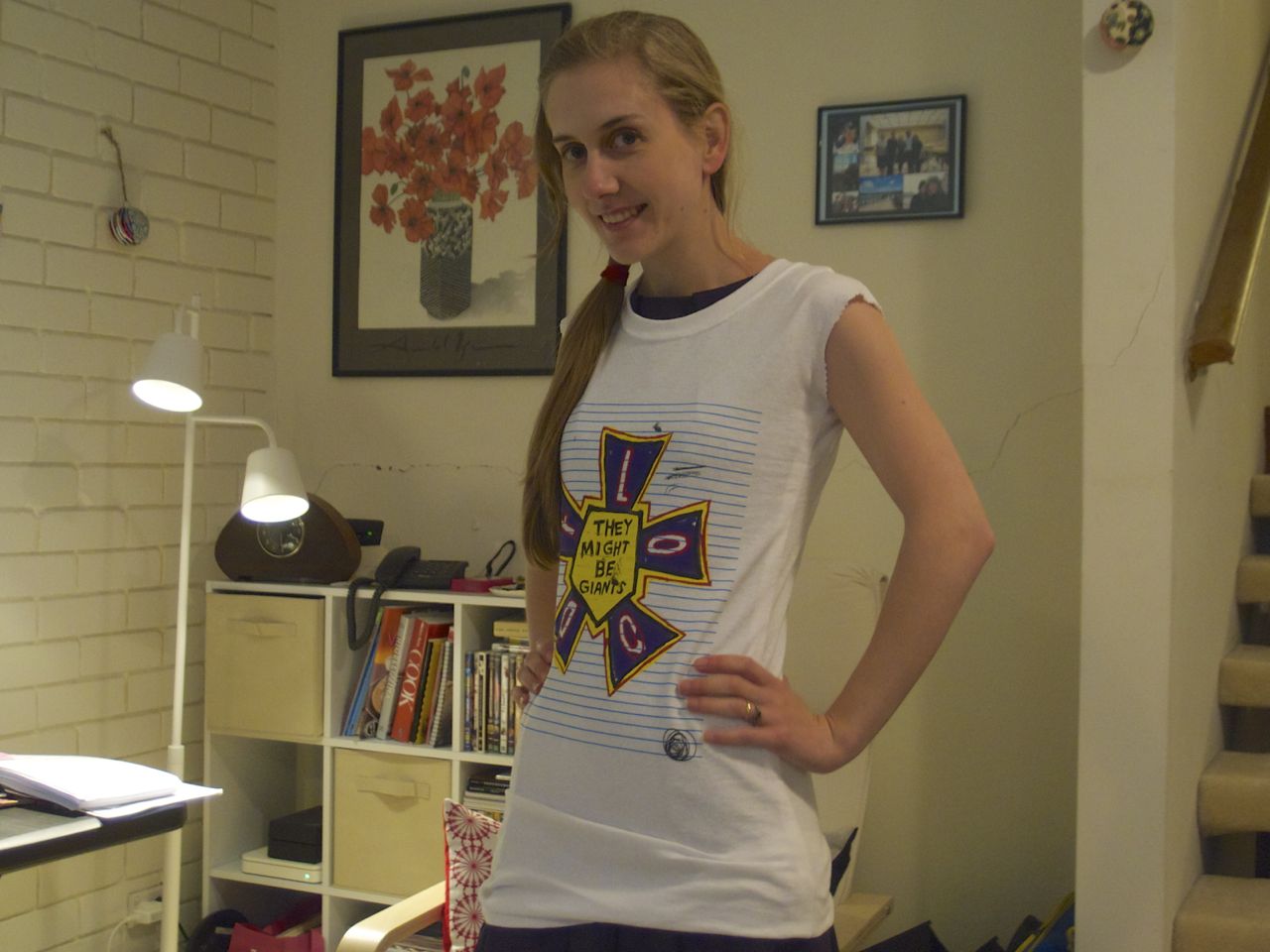
 Yay it fits!

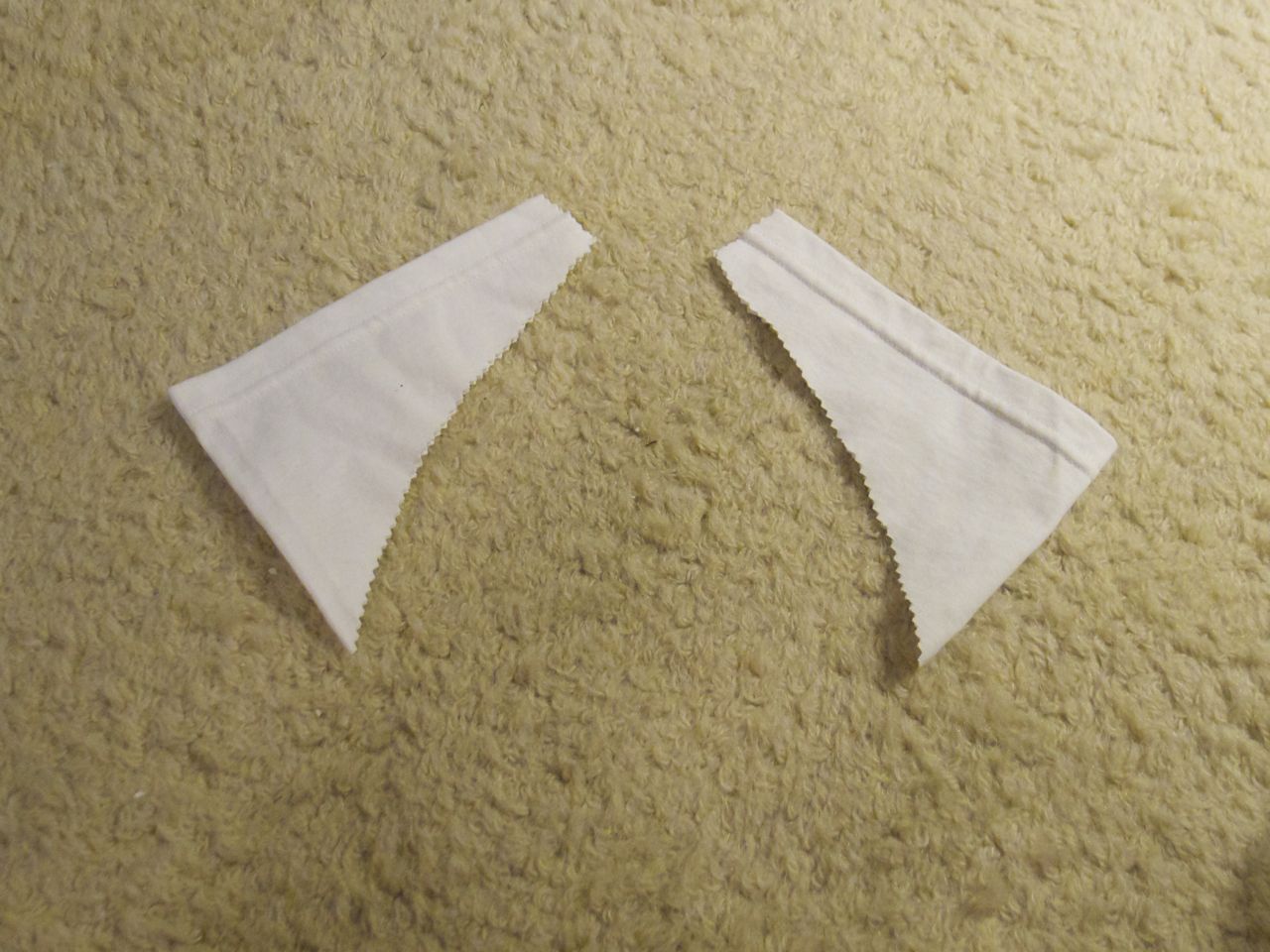
Now sleeves.  Take your small t-shirt sleeve and lay it on top of your big one, matching the edges together.  Trace and cut (leaving a seam allowance).

 You should get something that looks like this.  Turn them inside out and sew up the shortest edge.
Here’s the hardest bit.  Now turn your sleeve right-side out and your t-shirt inside out.  Put the sleeve INSIDE the t-shirt, matching the side seam of the shirt with the seam you just sewed on the sleeve.  The raw edges should match up.
 Pin it in place… it should look like this.  Complicated right?  It takes a few goes before you really understand what’s going on!
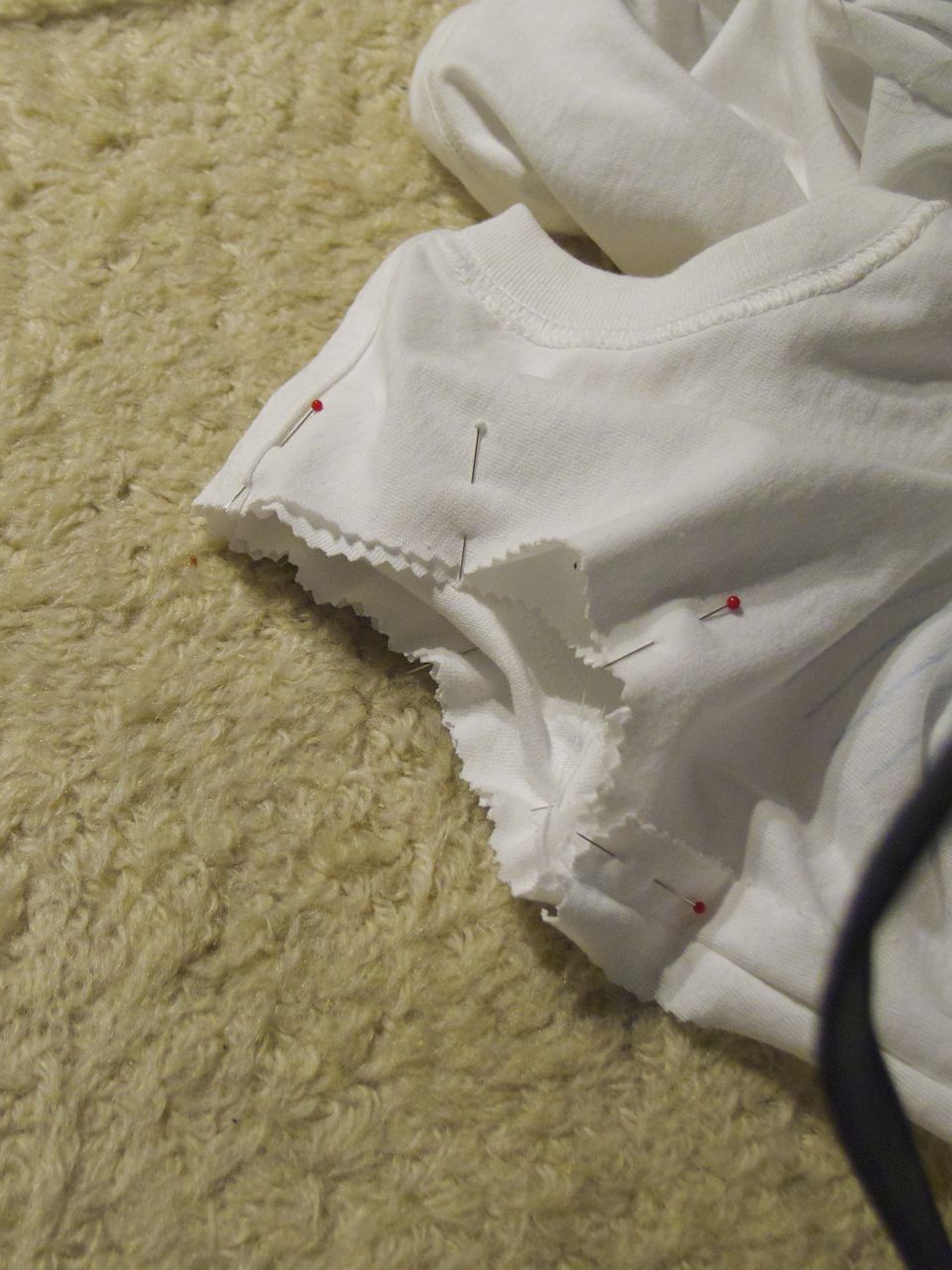
Sew around your armholes!  It took me a while to make the sleeves actually fit into the armholes, they kept being too big or small!  I had to adjust the size of the sleeves quite a bit.  But finally it worked!
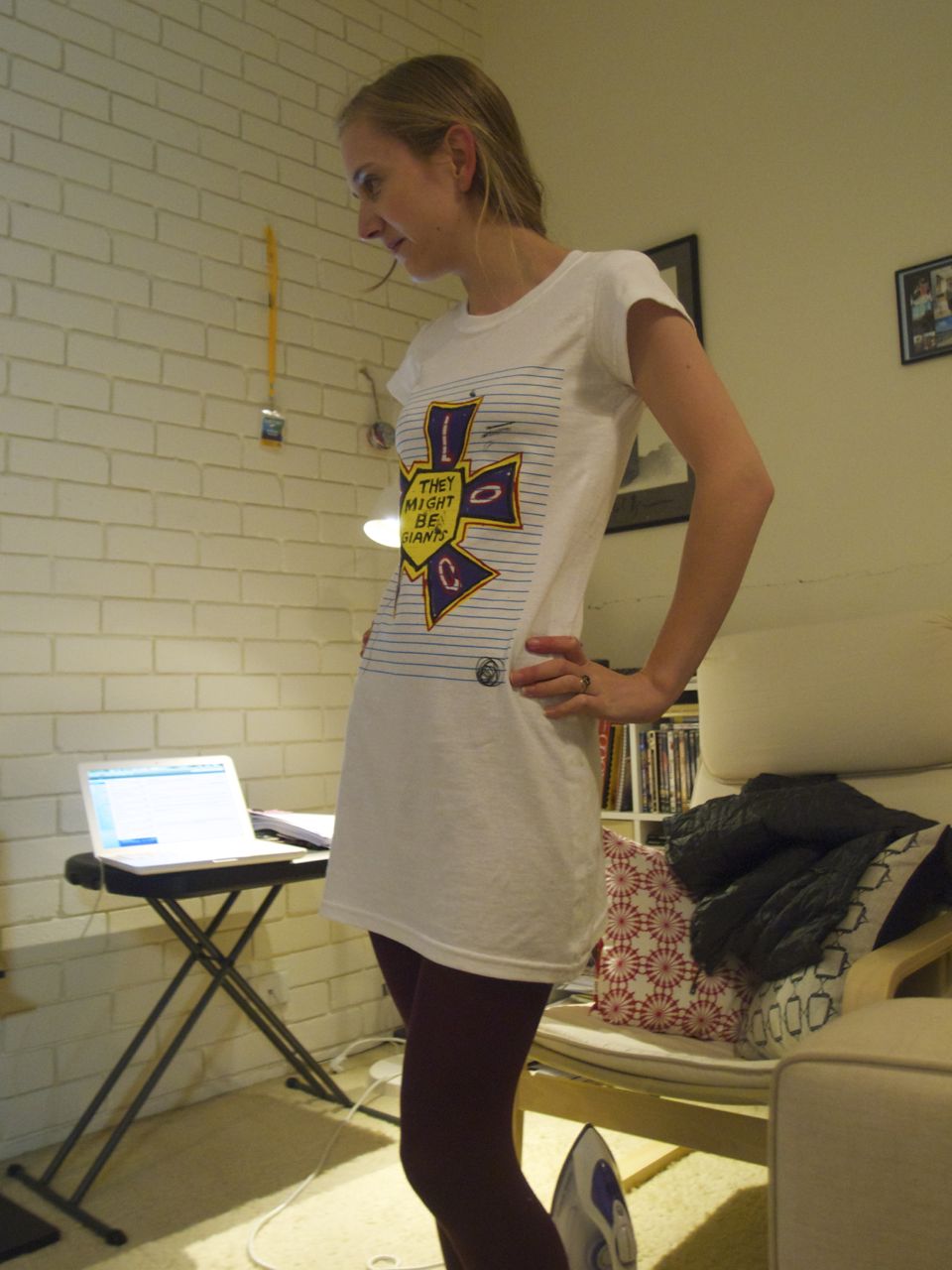
Yay a dress!  Or a nightie?  I’m not sure if I’ll wear this out but I love it to bits!
fashion

Clothing’s Sustainability and Environmental Impacts

Recently for my course I had to do an assignment called “Where do my clothes come from?”.  It was essentially an investigation into the processes that brought my clothes to me.  The particular item of clothing I chose to investigate was a coat from Valleygirl which cost me $30.  It was a polyester cotton blended fabric which was made to look like wool felt.

Design
Valleygirl’s website talks about how it’s a fash fashion chain that strives to bring the latest cutting-edge fashions (from catwalks, magazines, etc.) to the masses quickly and cheaply.  So the design for my coat was probably not even originally Valleygirl, but some copy of a high-end brand’s coat.

Fabric
The jacket was made from cotton/polyester.  Who knows where that was made!  Cotton is known for using a gargantuan amount of water (I’m sure you’ve heard the old factoid that it takes 2720 litres of water to produce one t-shirt) Actually, reading that article it’s kind of horrifying how much water goes into cotton.  Because it’s a crop, it also needs pesticides, and then it needs picking and processing, all of which takes a lot of power. 
Polyester is a man-made fibre created from fossil fuels, which are a finite resource. It also requires heavy chemicals and lots of power to create.  The one good thing about this fibre is that it can be recycled – but I wonder how much polyester fabric ends up in the recycling bin.

Construction
“Made in China” the label says.  As I wrote in my previous post about my dress comparisons, the wage for Chinese employees is quite low (depending on the province).  After reading “Overdressed“, I no longer expect anyone to be paid any more than minimum wage.  Plus, the price was $30 – I don’t even think it was marked down.  This is a jacket with a lining, collar, wrist bands, a back band, and a generally nice finish and fit.  

After all my research I was pretty upset with myself.  I don’t want to support this kind of brand, even if they do sometimes have things I like.  What I do want to support are local designers, crafters, and sewers, who make their products out of sustainable fabrics.  I want to support higher-end brands that are Australian made and beautifully made, and whose prices reflect the workmanship and care that goes into their pieces.  I think that after this assignment, I’m going to watch what I spend my hard earned money on, and hope that we can keep the local fashion scene alive.

What do you think?  Do you worry about where your clothes come from?
craft, diy, dress, fashion, paint

DIY Galaxy Print Dress

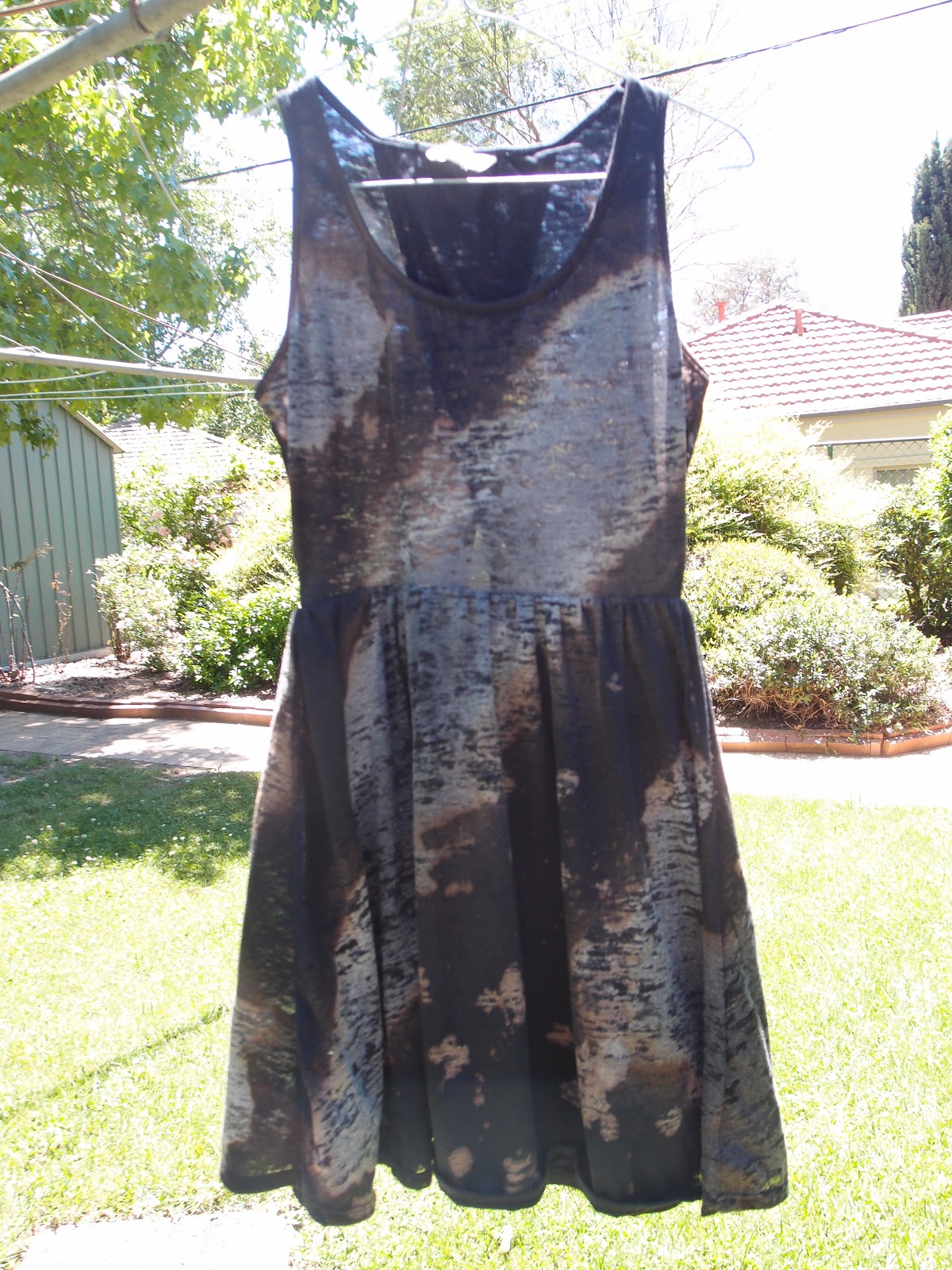
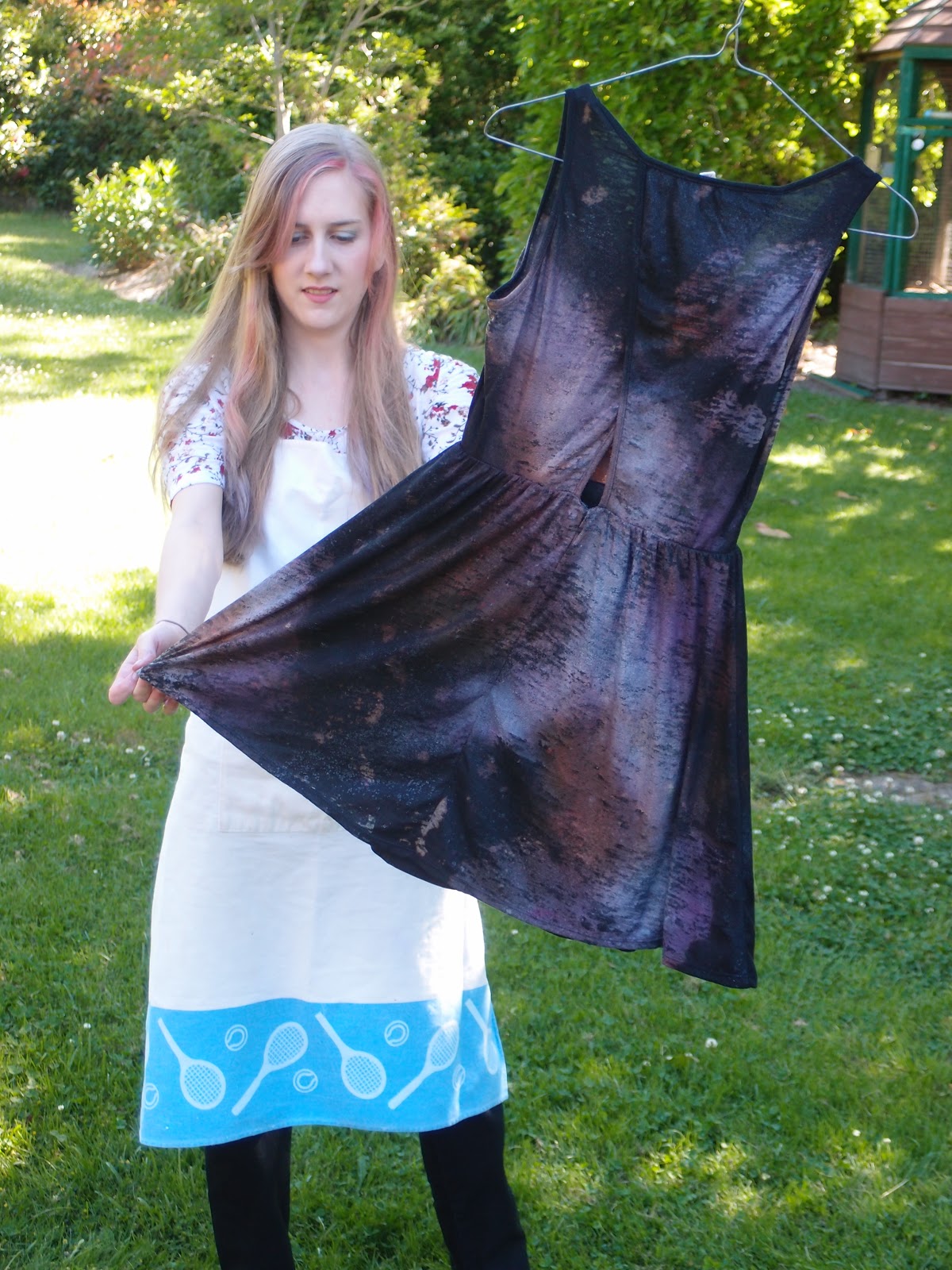
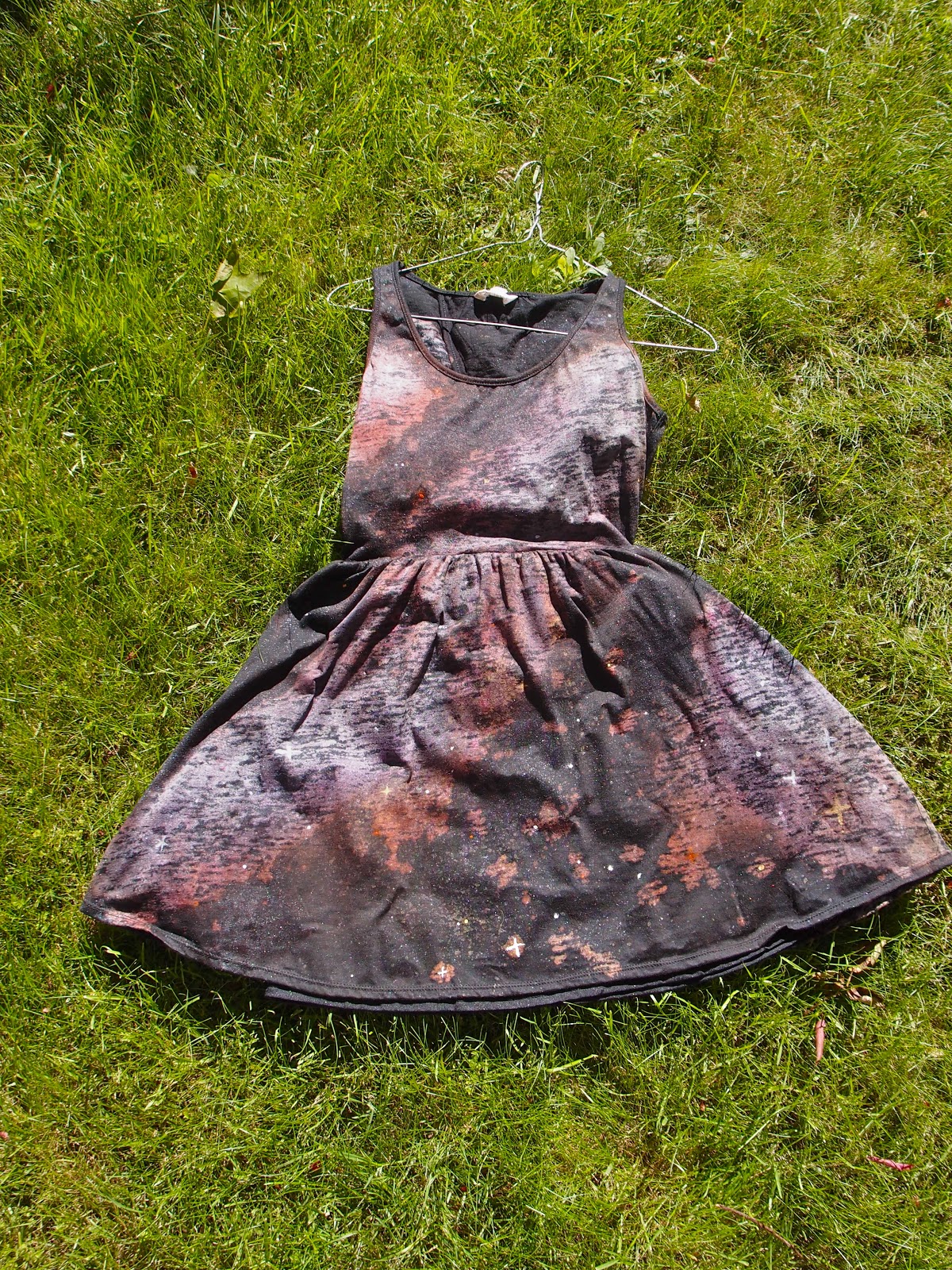
Recently, I’ve been seeing quite a few tutorials on how to make a galaxy dress at home.  I thought it looked fun so decided to try it on my own, and the results turned out great!

You Will Need:

Cheap black/dark blue dress.  Mine is a really cheap thin black dress from Jay Jay’s.  I wouldn’t normally wear something this short!  But I figured, if I mess it up no big deal.

Spray bottle

Bleach

Fabric paints.  I used both normal fabric paint and some old screen-printing paint I had.  I used dark purple, fuscia, red, yellow, gold, silver, and pearly-white.  People in other tutorials used spray-on fabric paint but mine worked really well with normal.

Paintbrushes

Plastic bags 

Let the tutorial commence.

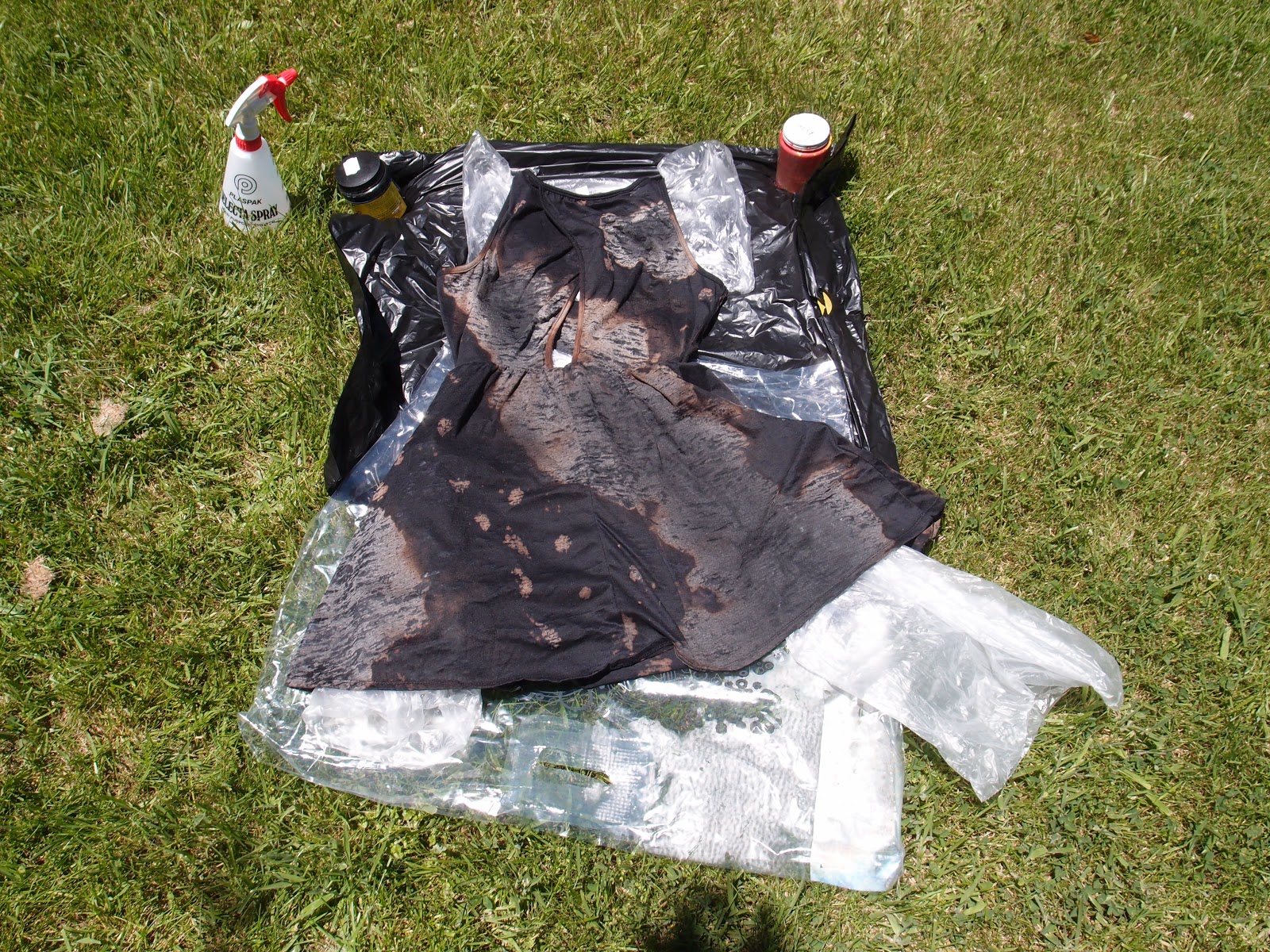
First lay out your dress on top of some plastic bags, with some inside to prevent things from leaking through.
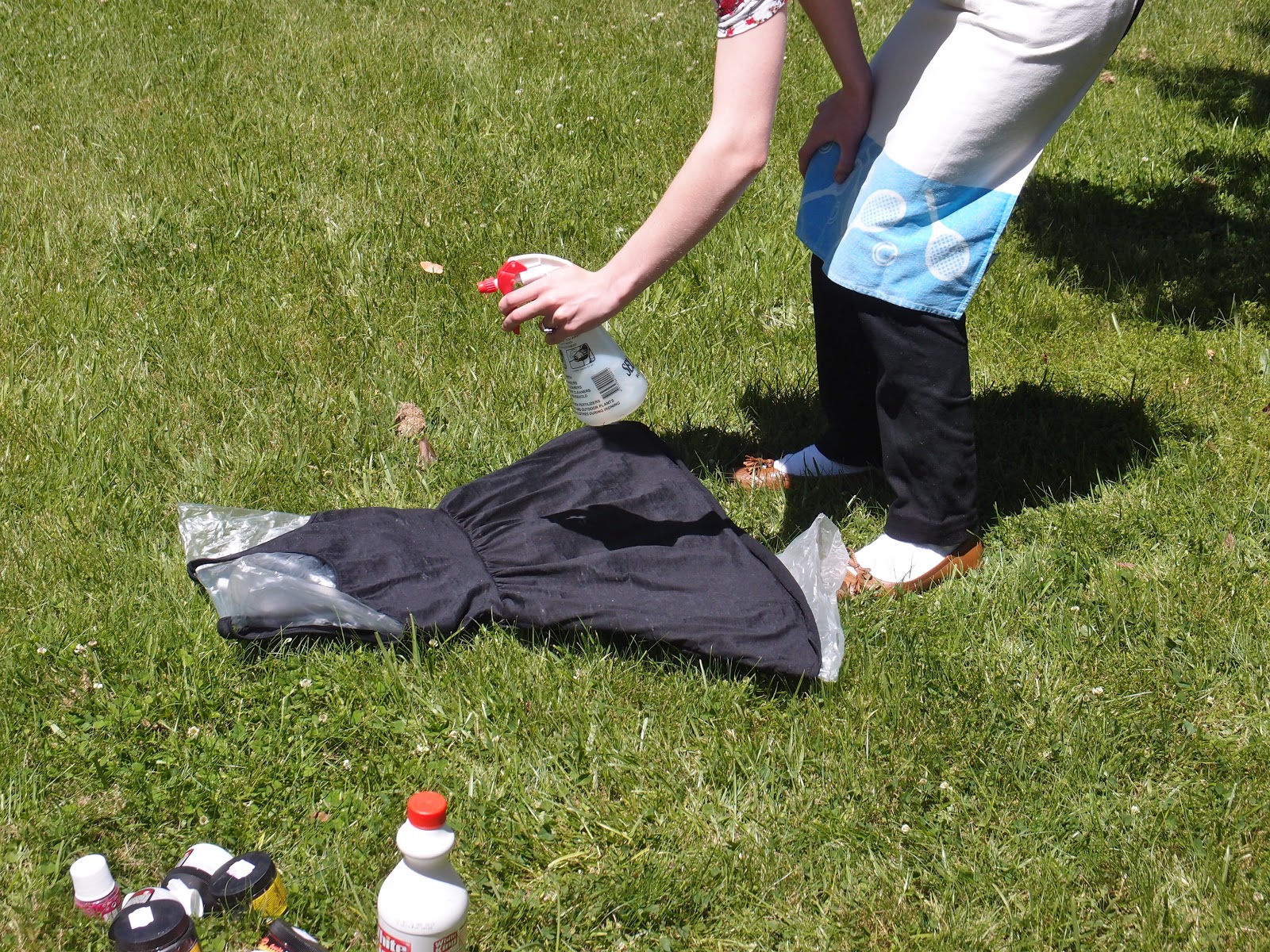
Mix your bleach with about equal parts of water.  You won’t need much, as this stuff is quite potent. 

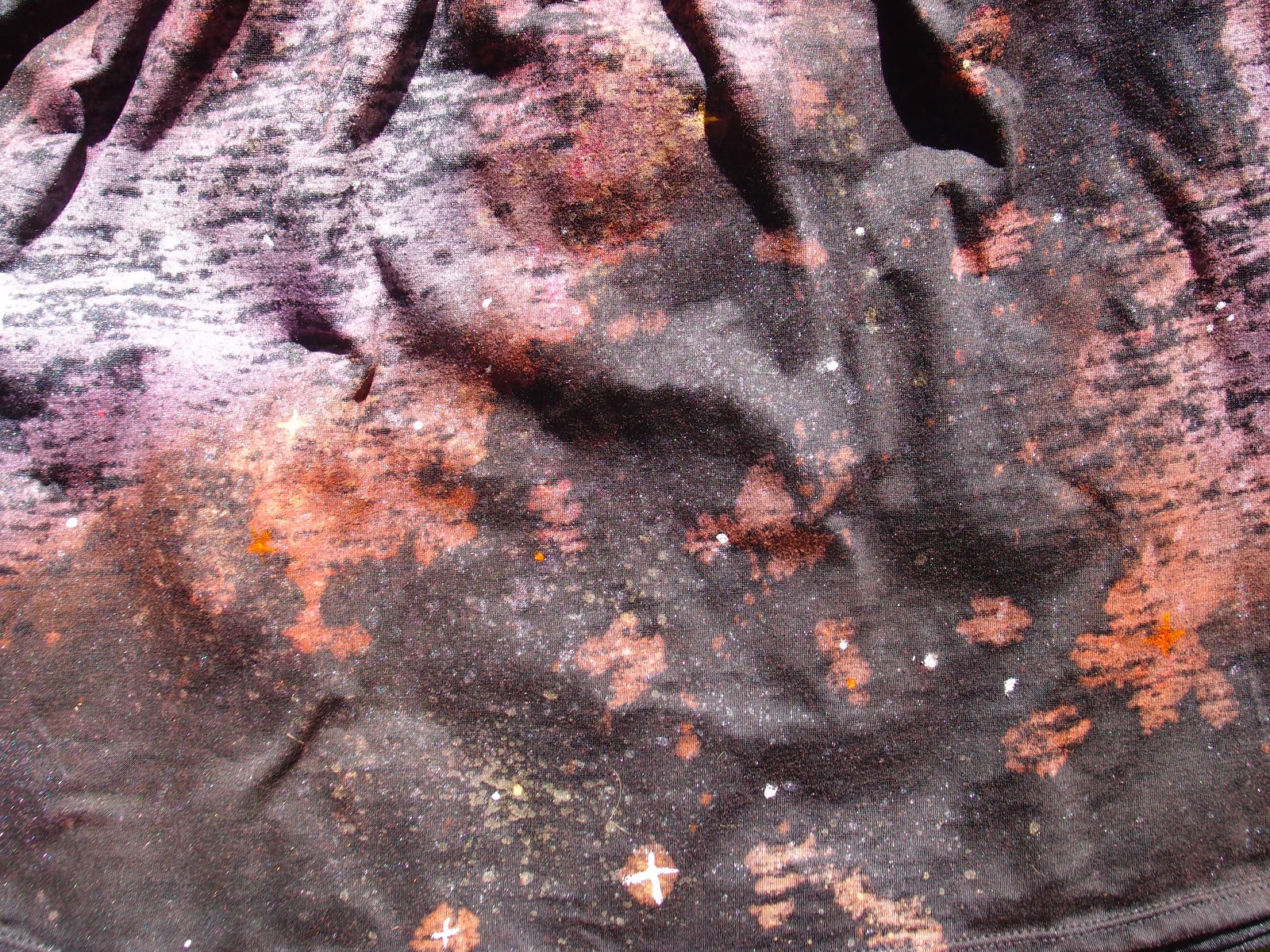
Spray on some nebulas and galaxies with the bleach.  The more bleach you spray, the lighter the area will become, so it’s nice to have it whiter on the inside of the shape. 

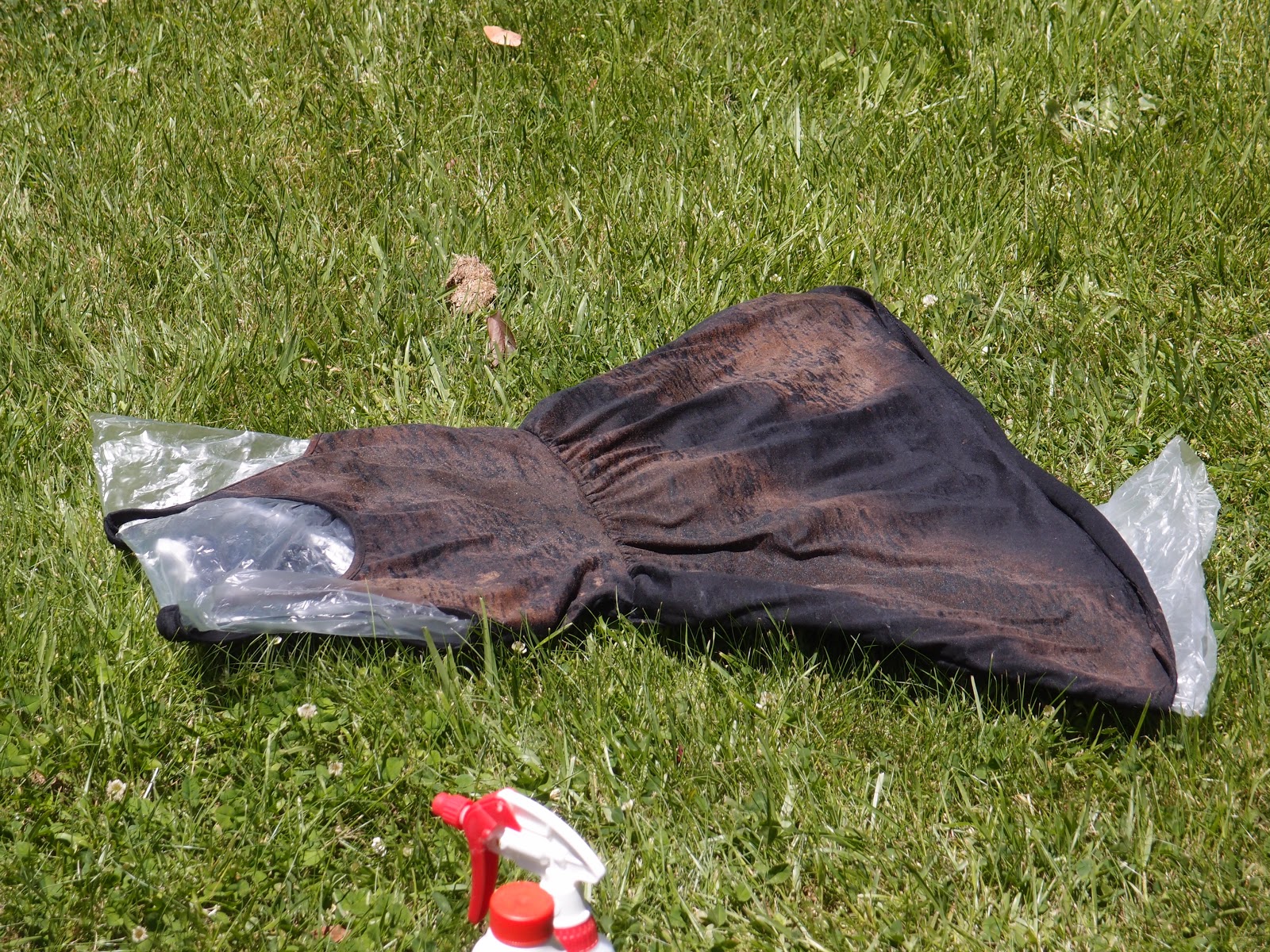
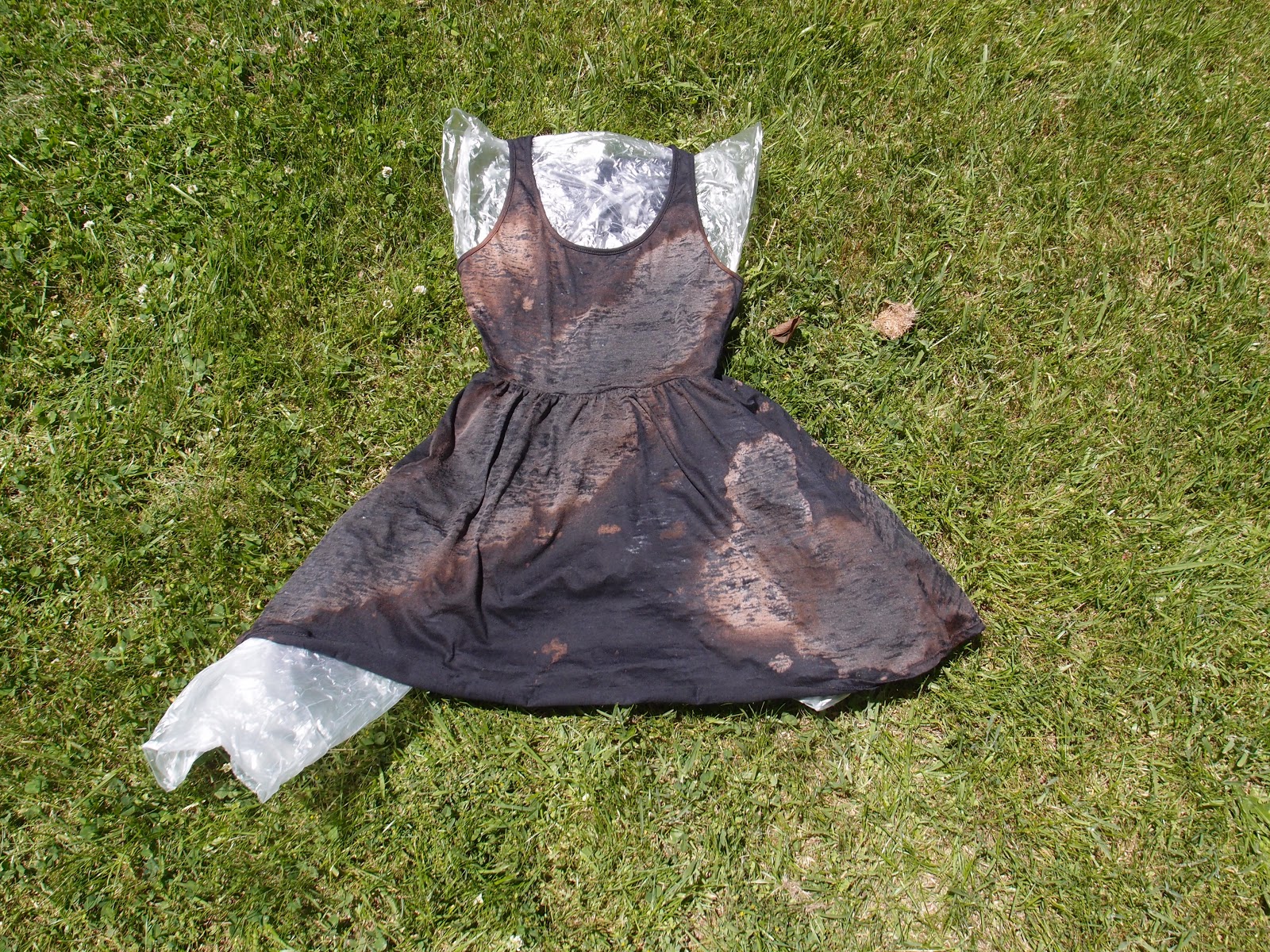
Wait for it to dry… and you’ll see the bits you sprayed more go whiter.

I added some drip drops of bleach to look like little distant galaxies. 

 The fabric of my dress was extremely thin and weird so it was kind of blotchy.

Now you need to put it through a wash to get all that bleach out!  Stinky gross!


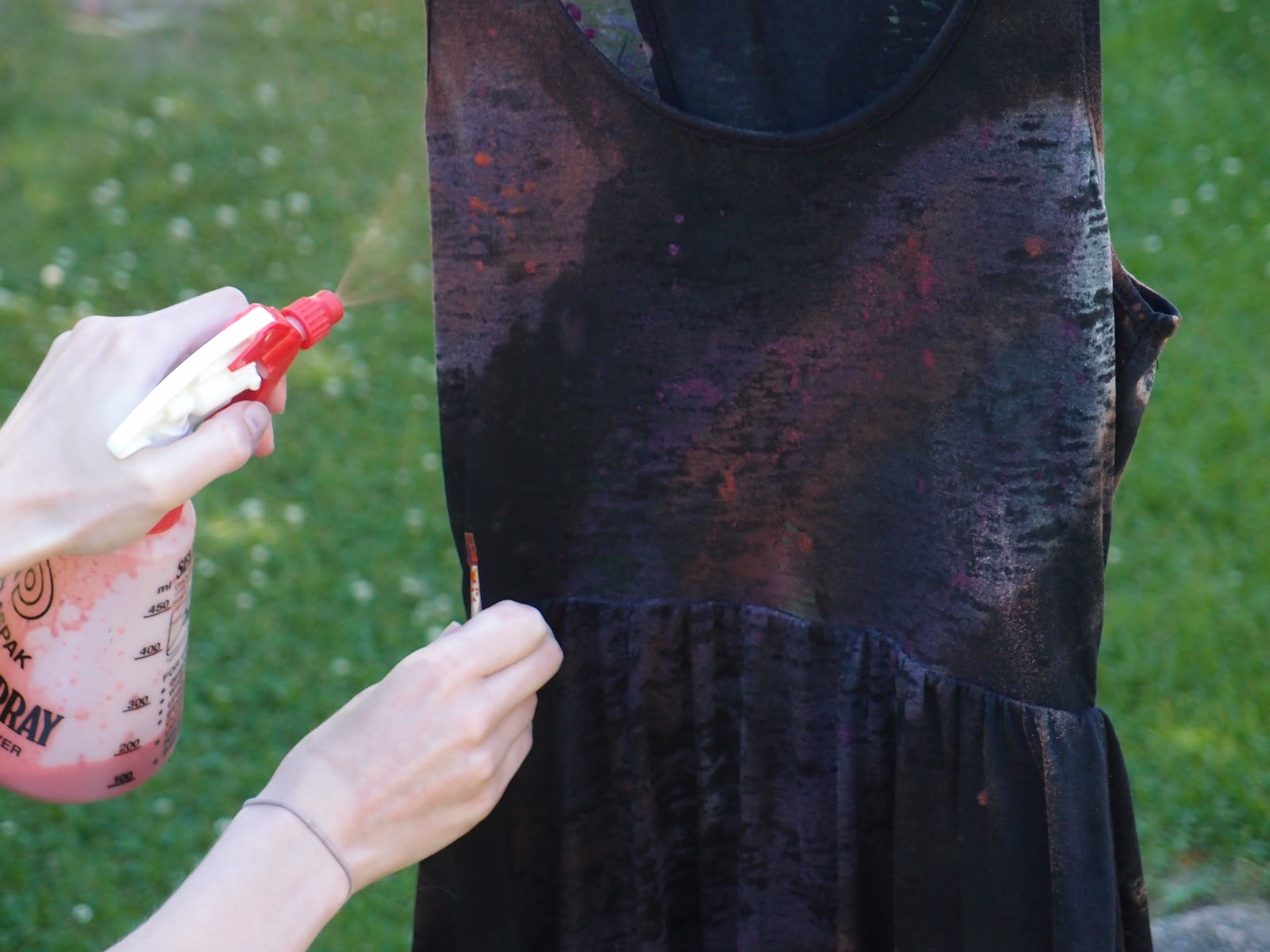
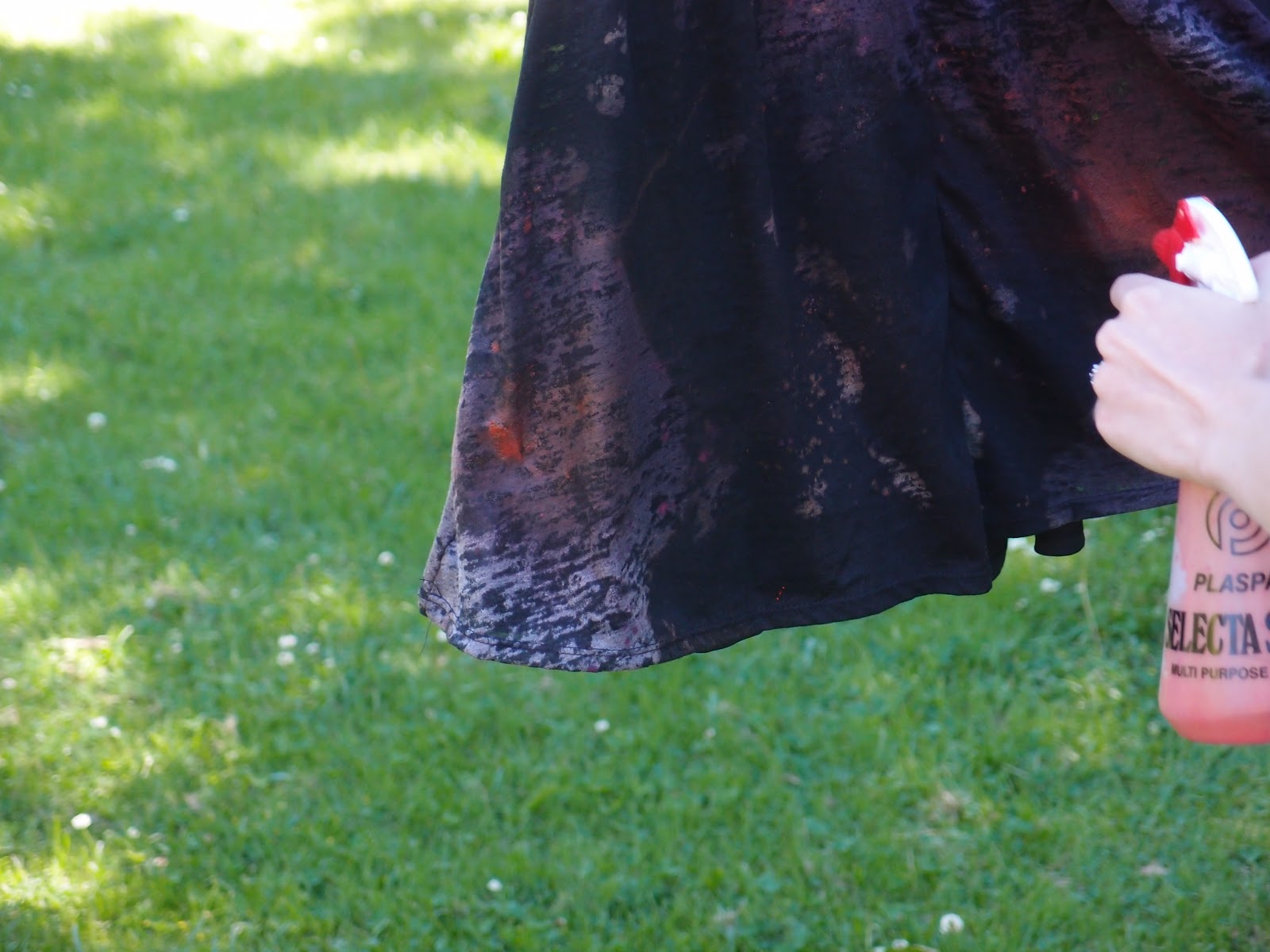
Now get a little bit of paint and put it in the (rinsed out) spray bottle.  Dilute with a bit of water to ensure you can actually squirt it through the bottle.  It doesn’t matter if it’s a bit thin, you can layer it up. Sometimes it’ll squirt out little blobs of paint, but that looks cool too!
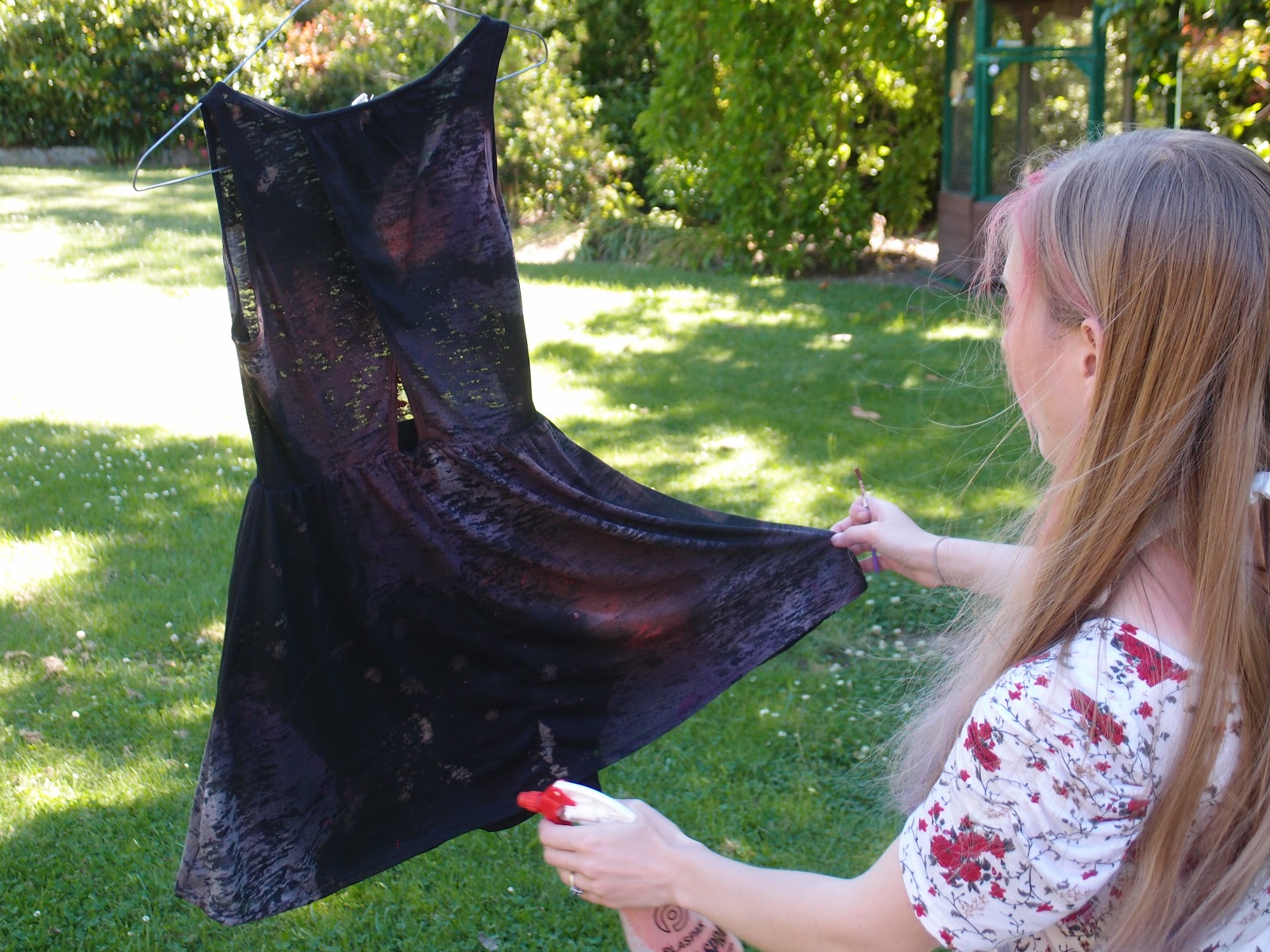
I started with the darker colours on the outside of the bleached patches, and moved towards the centre with lighter colours.  Make sure you rinse out the bottle each time.

It was easiest to hang it on the line for this process.

 Lastly I sprayed the whole thing with a mixture of silver and pearly-white, which gave the entire dress a gorgeous shimmer.  I sprayed lots of that colour on the middle of the nebulas to make it look like there was lots of stars there.

 Leave it to dry a bit, and then start to paint on little individual stars with a paintbrush.

 Some were little crosses and some were just spots.  I used gold, silver, red, and pearl to do this.

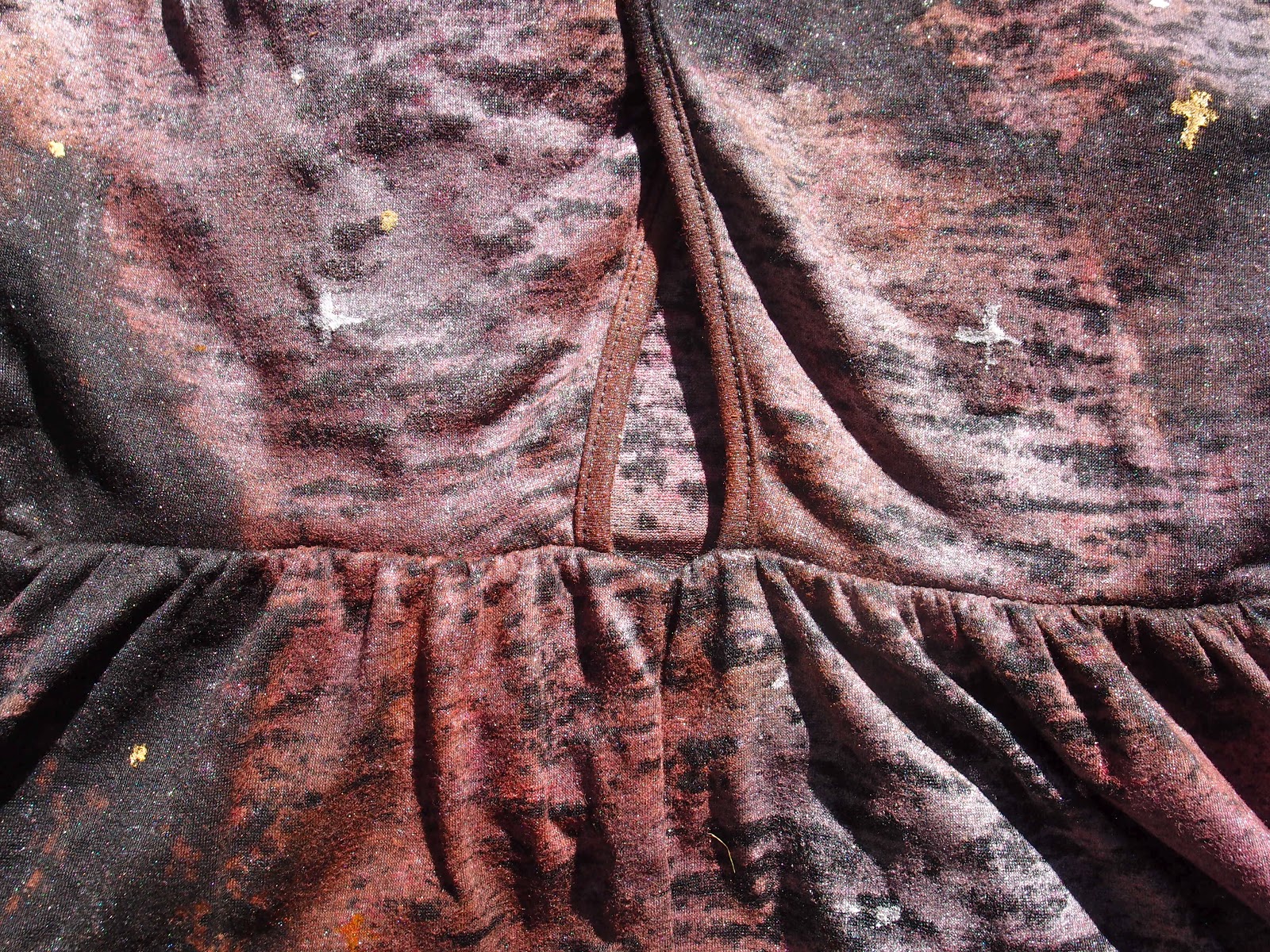
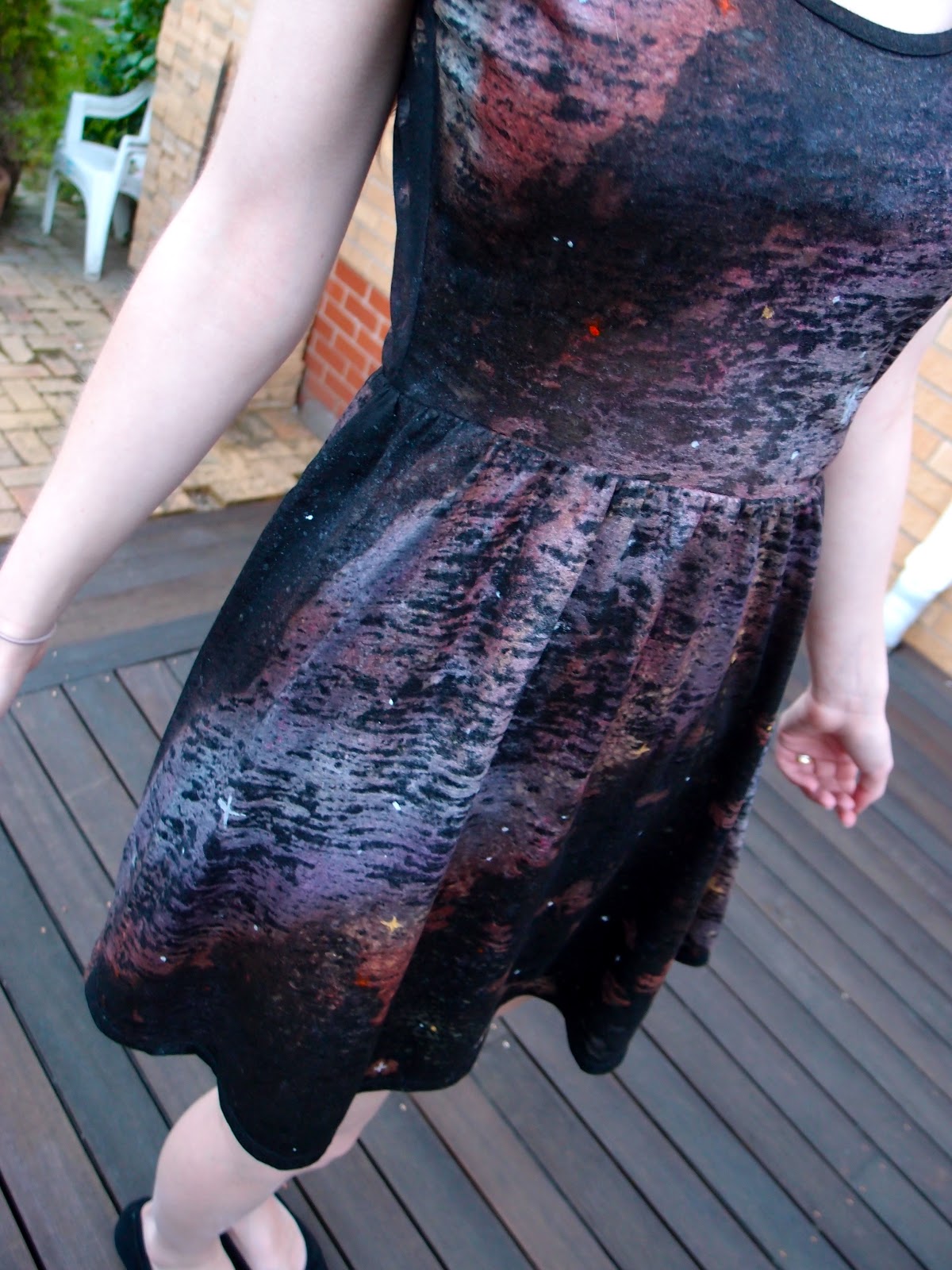
The back of the dress turned out beautiful I think!  It has a cute keyhole back.

Next, leave until completely dry and then heat-set the paint with your iron according to the instructions on the paint.  Probably best to put an old sheet in-between so you don’t get a galaxy print iron.

Done!

 Gosh it’s short.

 But cute!  I’m really happy with this and can’t wait to wear it to all this Summer’s pool parties!  Does anyone I know have a pool?  Guys?  Anyone?

Now I know this method works, I might get a nicer black dress and do it again!  It was a really fun afternoon!


co-ordinate, fashion, hair, outfit, sewing, skirt

How to sew a half-circle skirt!

 Yesterday I made myself a half-circle skirt, and I am in love with it!  It’s surely the best thing I’ve made!  It’s much more wearable than a full circle skirt, and it falls beautifully.  The photos I too don’t do it justice.  The Best.  I took inspiration from Four Square Walls (which is my new favourite blog), and watched a couple of youtube tutorials.  It’s a very easy skirt to make!  Even You can do it!

Let the tutorial commence.

Materials: 
Jersey fabric in the colour of your choice (not too stretchy), and matching thread
Sewing machine
Tape measure
String/ribbon
Hook and eye
Skirt zipper (15cm)
Pins and sewing needle
Paper


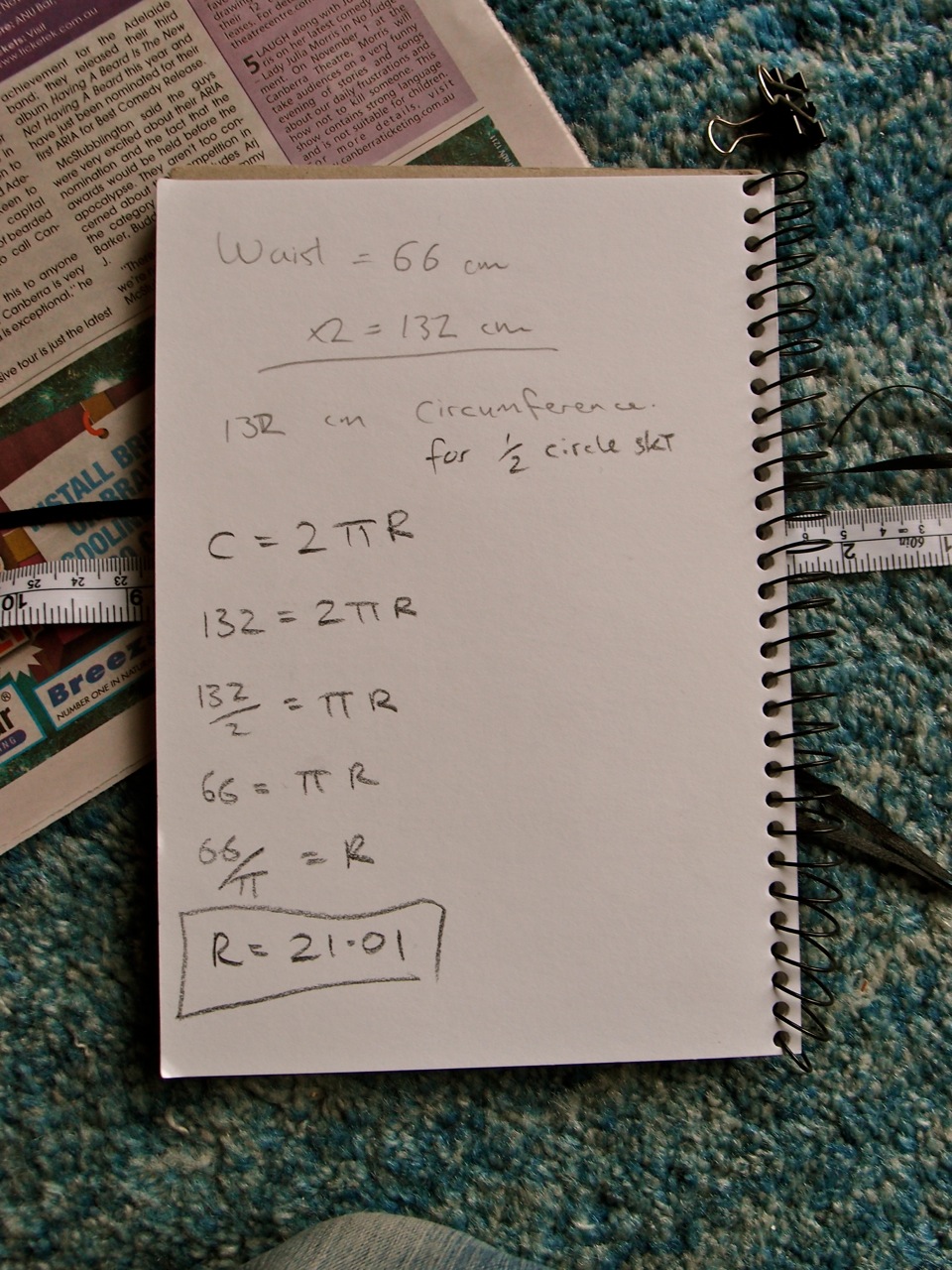
First you need to do a little maths.  Since this is a half circle skirt and not a full circle skirt, you need to double your waist measurements so that the half-circle radius is your actual waist measurements.
Circumference = 2 * Pi * R (we’re after R, the radius).
Circumference = 2 * waist measurement, so for me 66 * 2 = 132.
132 = 2 * pi * R
132/2 = Pi * R
66 = Pi * R
66/ Pi = R
R = 21.01

You’ll need a big piece of paper (I stuck some newspaper together) with a right-angle corner. Most (all) newspapers or whatever are right angled rectangles.
So to draw the pattern, tie a pencil to a bit of string and measure out your radius (mine being 21cm).  Put a pin in the string at that point, and stick it in the carpet.  Put your right-angle corner at the pinpoint.  Now draw your radius arc on the paper.  This is one half of your WAIST measurement.

 Now decide how long you want your skirt. Just hold a measuring tape to your waist and measure to where you want the skirt to end. I wanted mine 62cm from my waist.  Remember to add a little seam allowance.
Now add that measurement to your Radius measurement.  So mine was 62 + 21 = 83.  Put a pin in the ribbon at that measurement and draw an arc on the paper the same as before.  Cut it all out.

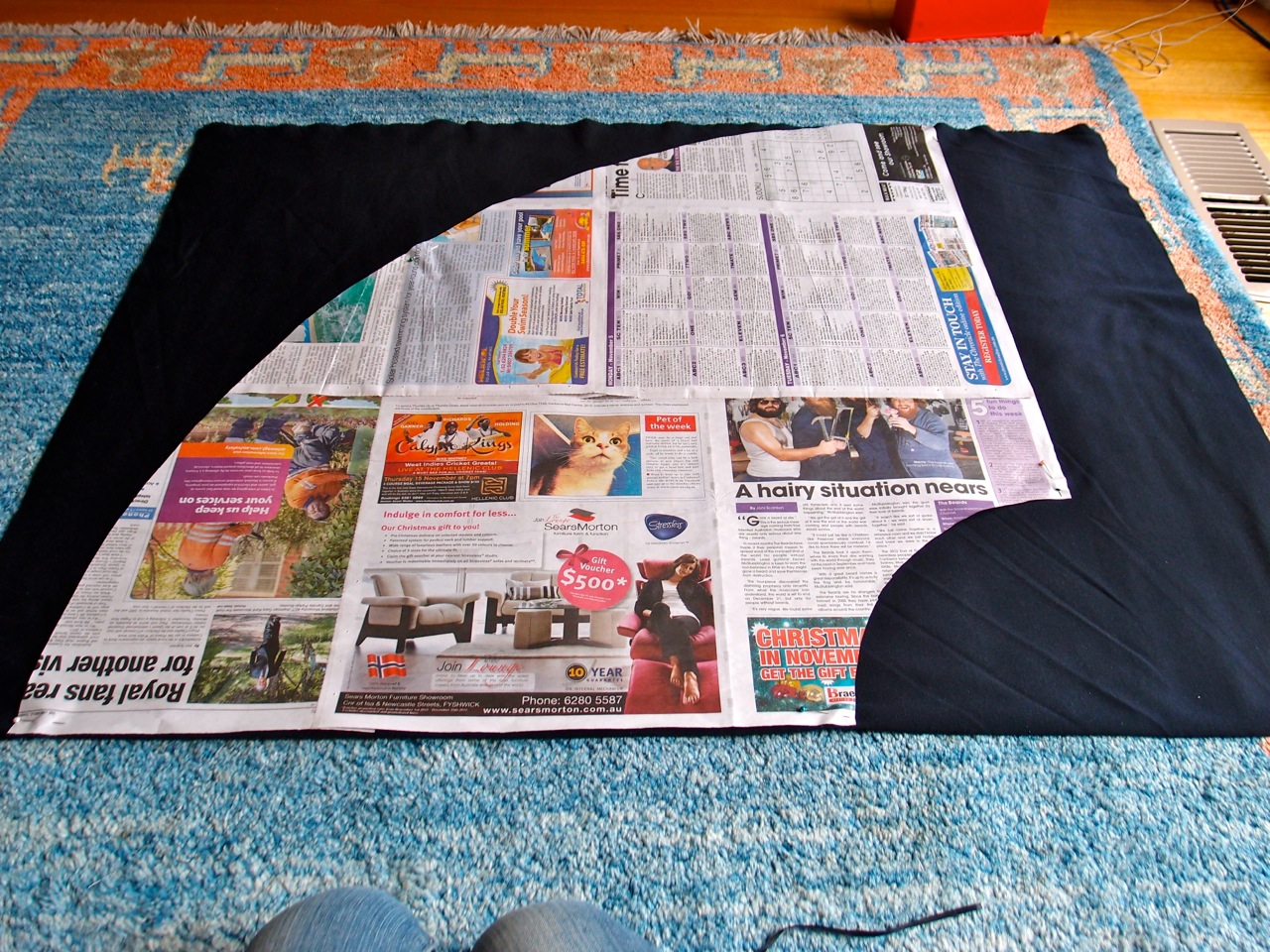
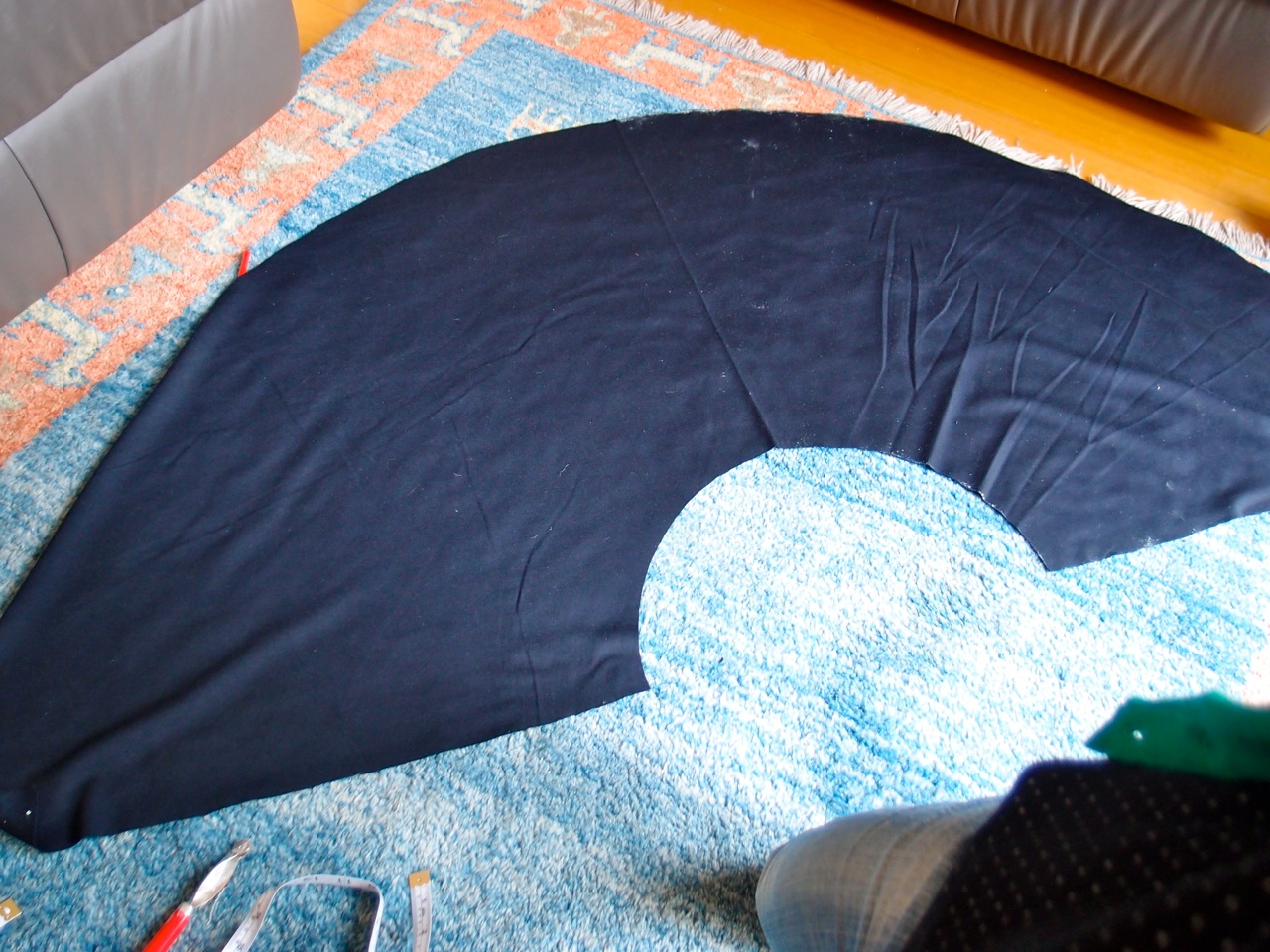
 It should look like this.  Please note that this is a quarter of a circle, as we will cut on a fold for the full half circle.

Lay out your pattern on your fabric.  In my case, the fabric is folded in half with the fold at the bottom of the picture.  Pin and cut.

 You should end up with this.  Did you?  Yay!  Hold it up to your waist and gad about the house.

Now for the waistband.  If your fabric is stretchy, cut a rectangle exactly the length of your waist (don’t worry about seam allowance).  This way it will hug your waist nicely and won’t fall down.  If your fabric is non-stretch, you’ll have to give a few cm seam allowance.  You don’t want to be cut in half.
You can make the waistband as wide as you choose, mine is around 5cm.  Just cut a rectangle with your waist measurement as the length, and your waistband width x 2, plus 4cm turnover.
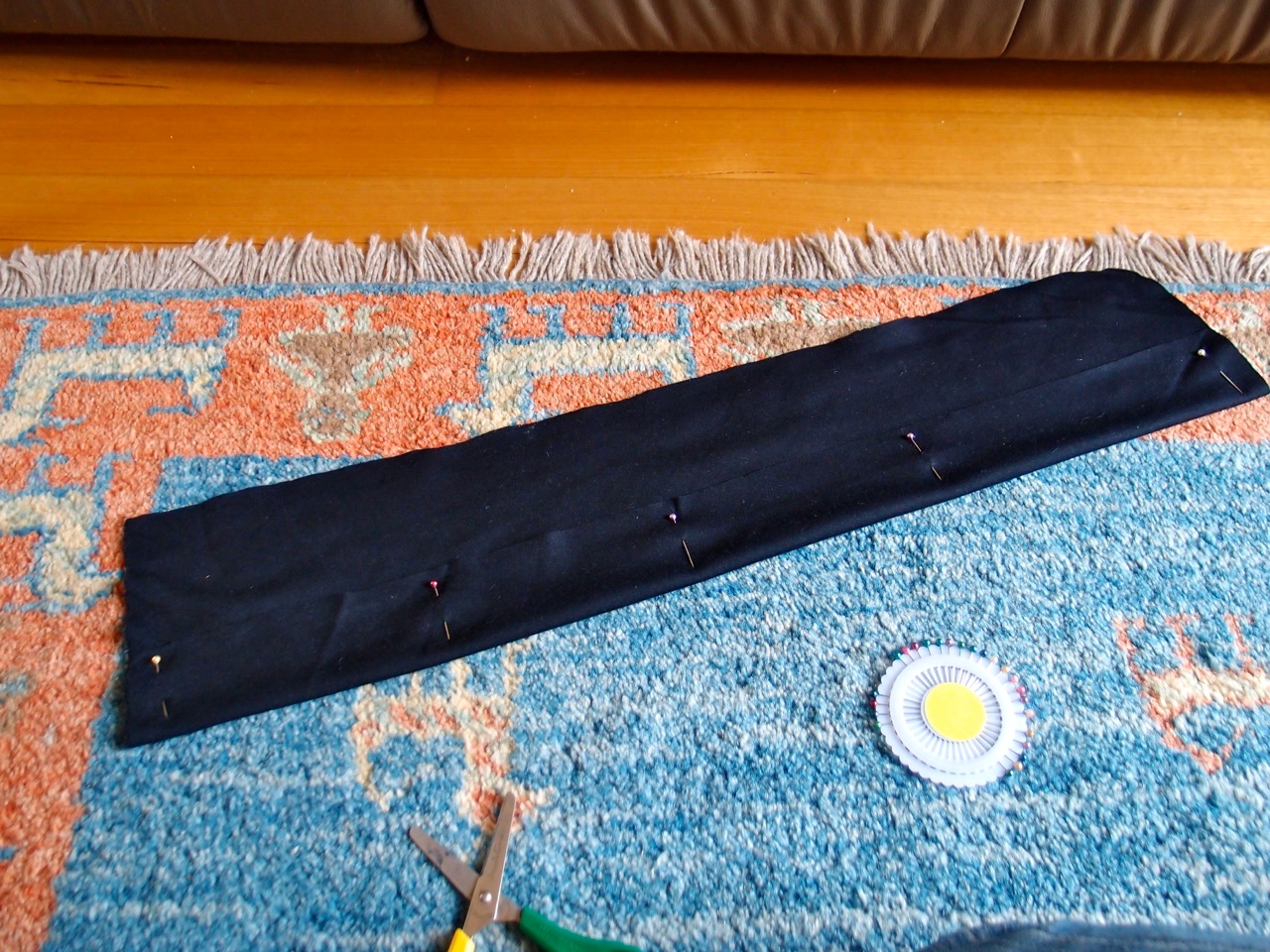
There are plenty of tutorials on how to make a waistband (and I probably do it wrong!) but all I did was fold up some seam allowance on the long edges, and fold it in half.  I pinned it so that the folds wouldn’t come out.

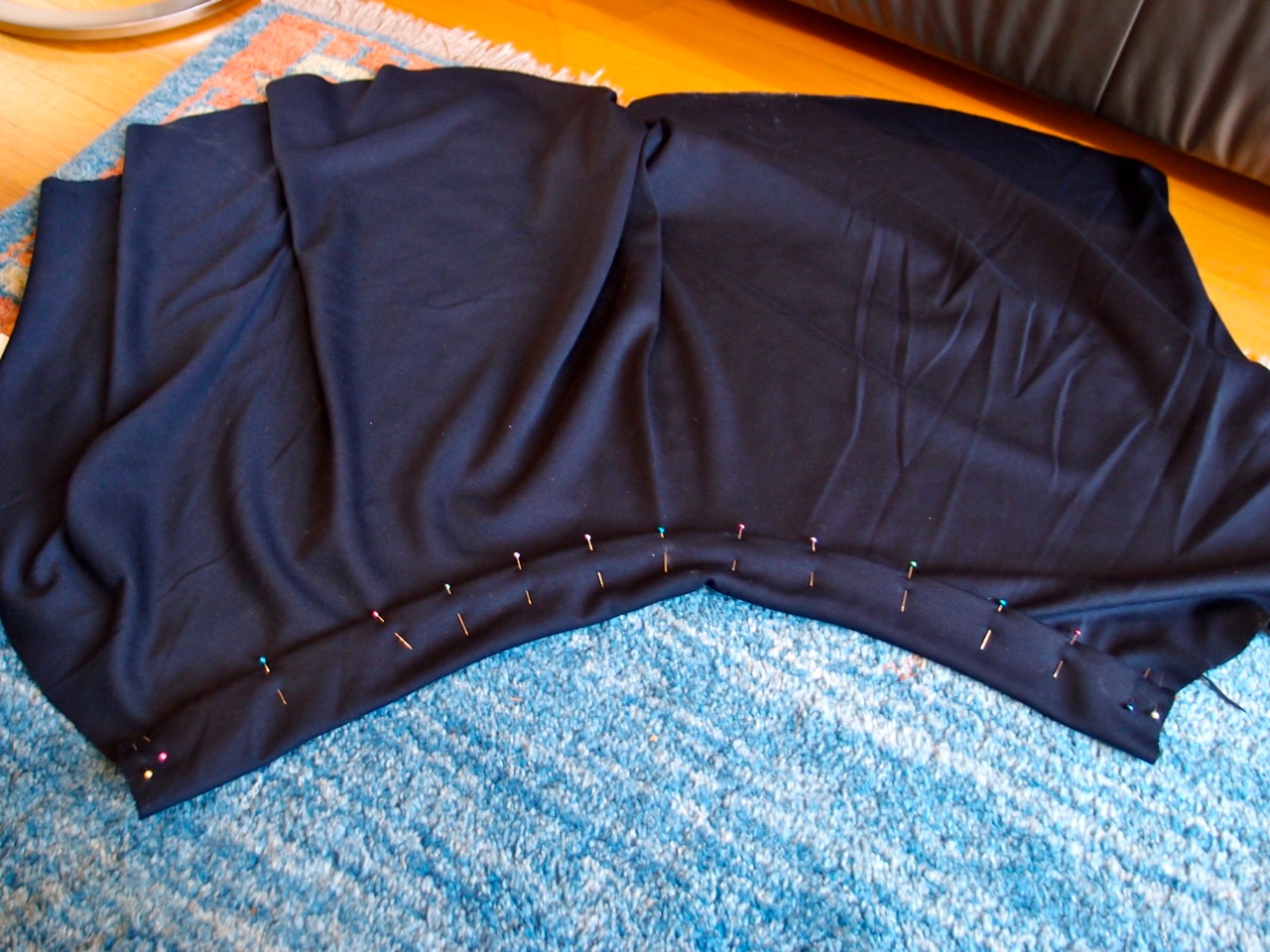
 Next pin your skirt into the waistband.  I just put about 1.5cm of skirt fabric inside the waistband.  My advice is to pin the ends first, then find the centre and pin that.  This is so that you can figure out if anything is too long or short, and stretch it to fit.  It’s probably best if your waistband is a little smaller than the skirt top.

 Now topstitch the waistband to enclose the skirt inside.  It shoud look like this when done.  Now you get to pick which side looks best as it’s been made the same on both sides.  I had some daggy stitches on one side so it was easy for me to choose!  Hot Tip: Stretch the fabric as you sew it, so that it will be stretchy afterwards!

Next you get to sew up the side seams.  Place your zipper where you want it to go and mark where you want to sew up to.  Then go ahead and sew it up!  I’d recommend sewing from the top down, so that if the skirt hem is uneven you don’t end up with a weird uneven waistband.
Sew your zipper in next, in whichever way you choose.  I had to hack away some of the inside waistband so that the sewing machine could go over it, but it looks fine on the outside!

Just pop in a hook and eye closure on the top of the skirt!
Next pop it on and see how much you want to take it up.  I took mine up about 1.5cm, as I was after a mid-length skirt.

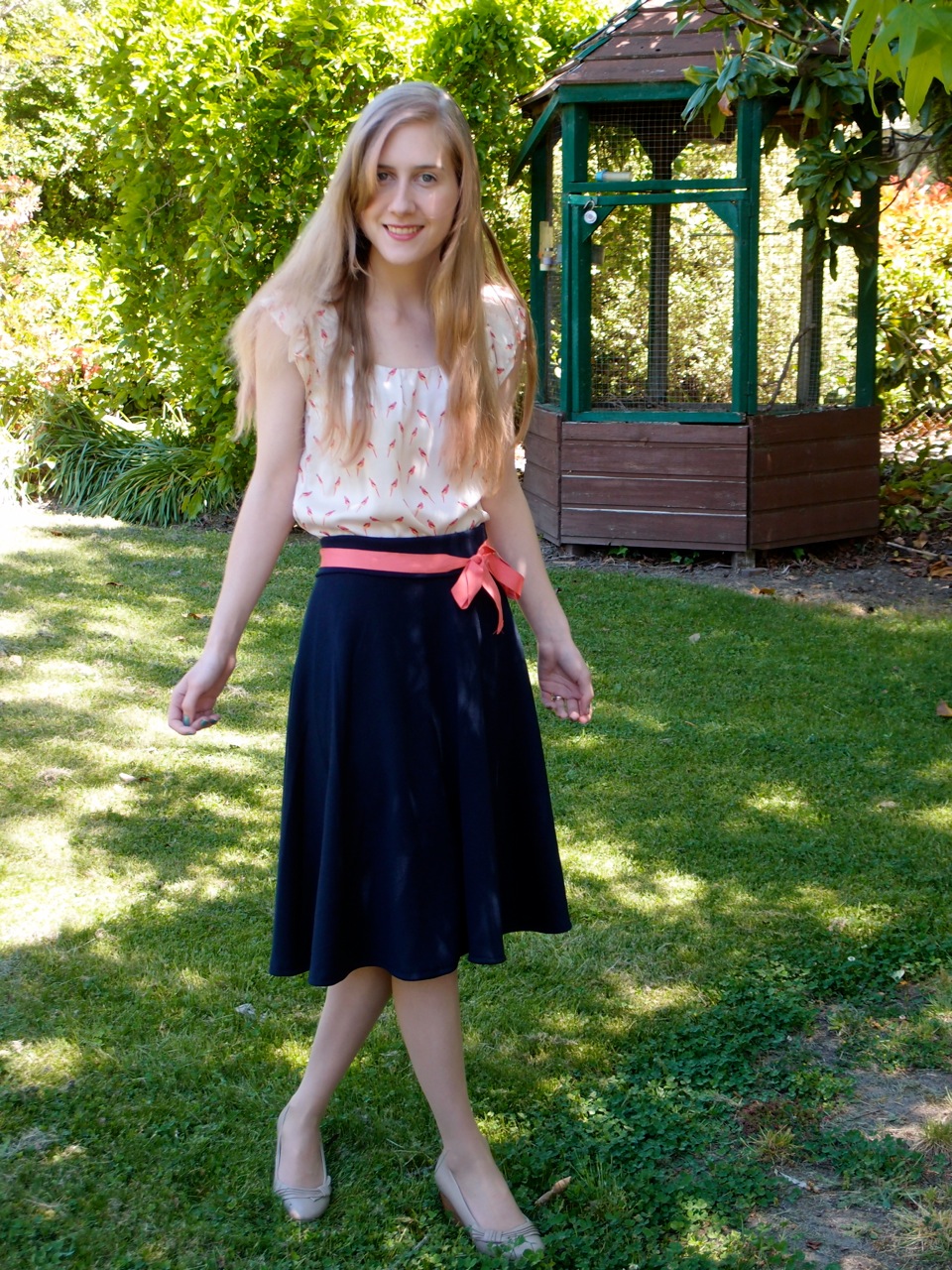
Worn.  I paired it with a cute top from Target and a pink ribbon.  Next time I’ll take some more awesome photos that are less dappled and more high-heeled.

Also, I put some pink in my hair!  It ended up being a bit more peach than pink, but I love it!  My mum, not so much.  I’ll show you how in another blog post 🙂

cute, fashion

A forgotten trend – the pocket handkerchief

Those who know me will know that I love hankies.  I always have at least one in my pocket, one in my bag, and occasionally one in my bra strap when I don’t have pockets.  I keep one under my pillow, and when I change my bed sheets I find a whole cache of them where they’ve multiplied.
I’ve had these since I was a little girl.  My parents use hankies so of course I did too!  I never understood why other kids always had runny noses, or why you’d use a tissue only once.  Other kids thought that hankies were only for old people.  But I think that old people are just more experienced humans who are just as young as me at heart, and they probably know a lot more about the world than I do – so – we young’uns should also use hankies 🙂
They are not only useful (you can use them for a whole range of things – not just nose blowing), but they can also be really cute.  Here’s a few of my favourite hankies that I own.
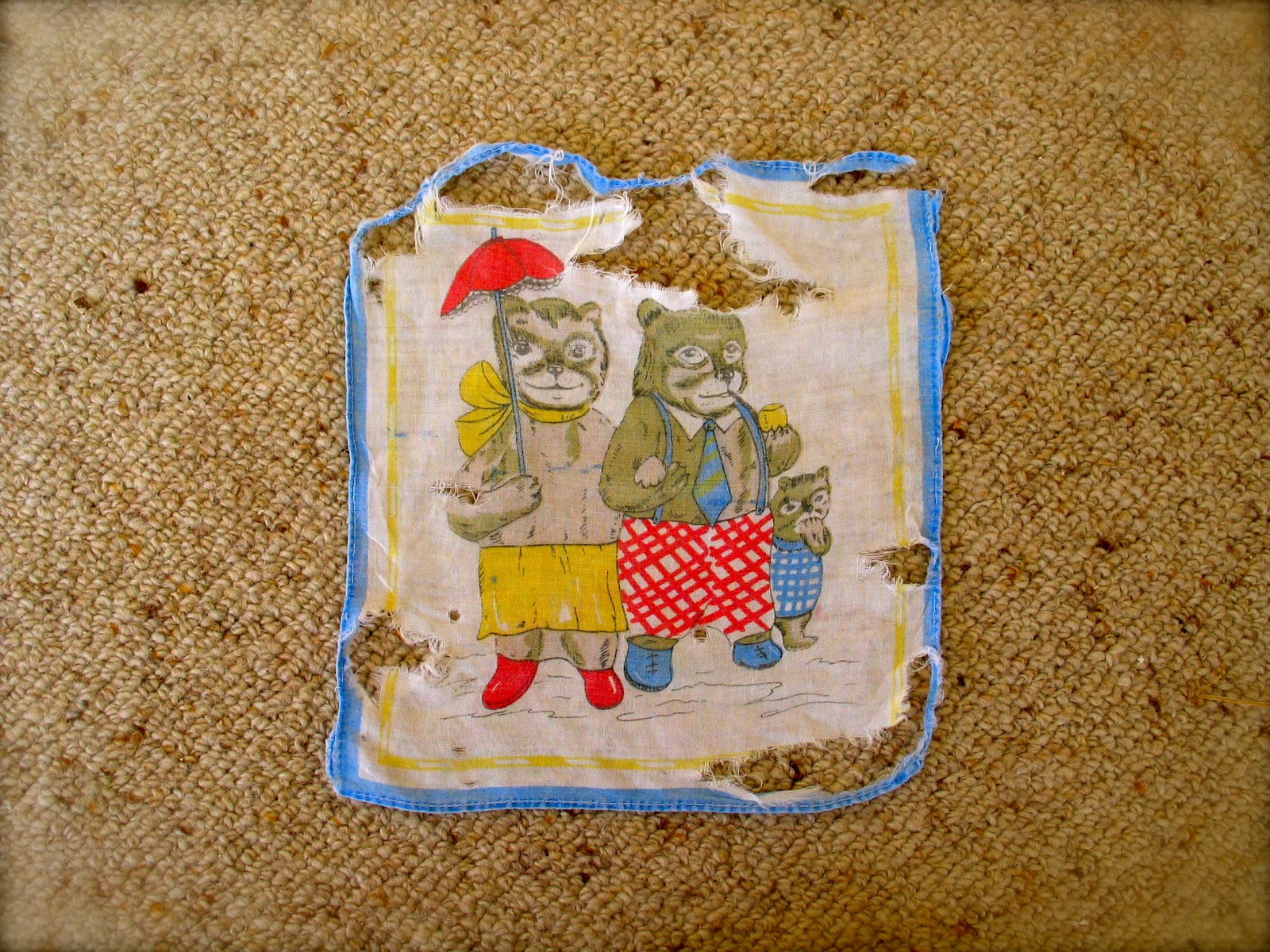
I can’t remember ever not having this one, so it must be nearly as old as me.  I’d put it at around 1991.  The bear family out for an outing.  It’s so raggedy it’s not usable, but I just can’t get rid of it!  It’s precious!
Pretty flowers
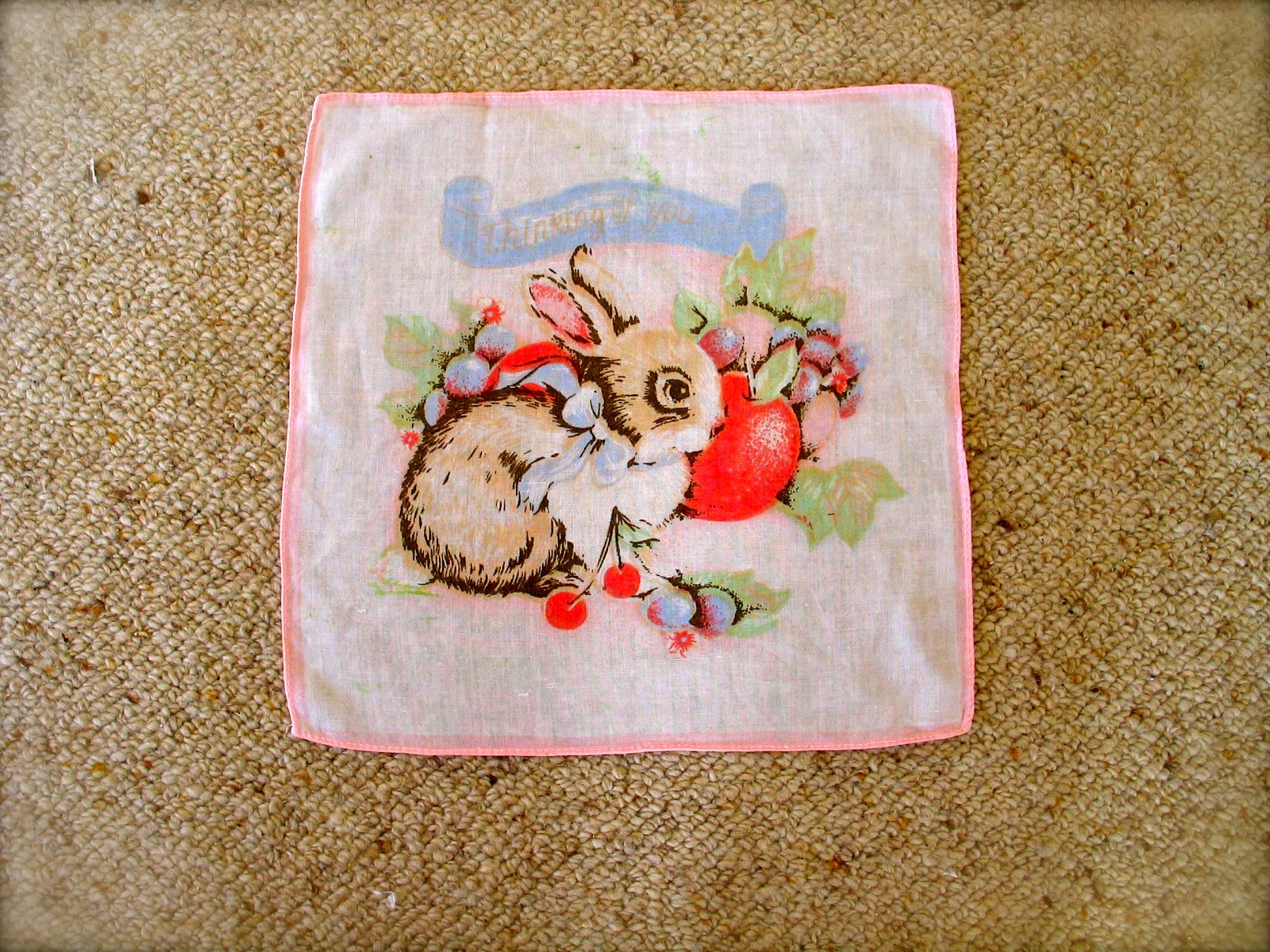
This lovely rabbit has a scroll above his head that reads “Thinking of you”.  I wonder who was thinking of me.  This one I probably got at around age 9.
I’d put this at around 1992.  Whales!
Same vintage as above.  All sorts of things on this cute hanky!
I love how retro this one looks with its bold colours.  I also have this one in a pale green and a blue.
This is a hanky from Japan.  They sell a LOT of them in Japan, but I’ve never seen anyone blow their nose in Japan.  They use them to dry their hands in public bathrooms apparently.  But it works for noses too.  Cute bunnies!
All my hankies together, plus some I didn’t show you.
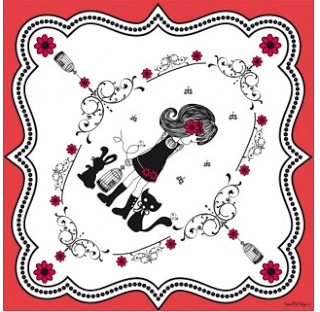
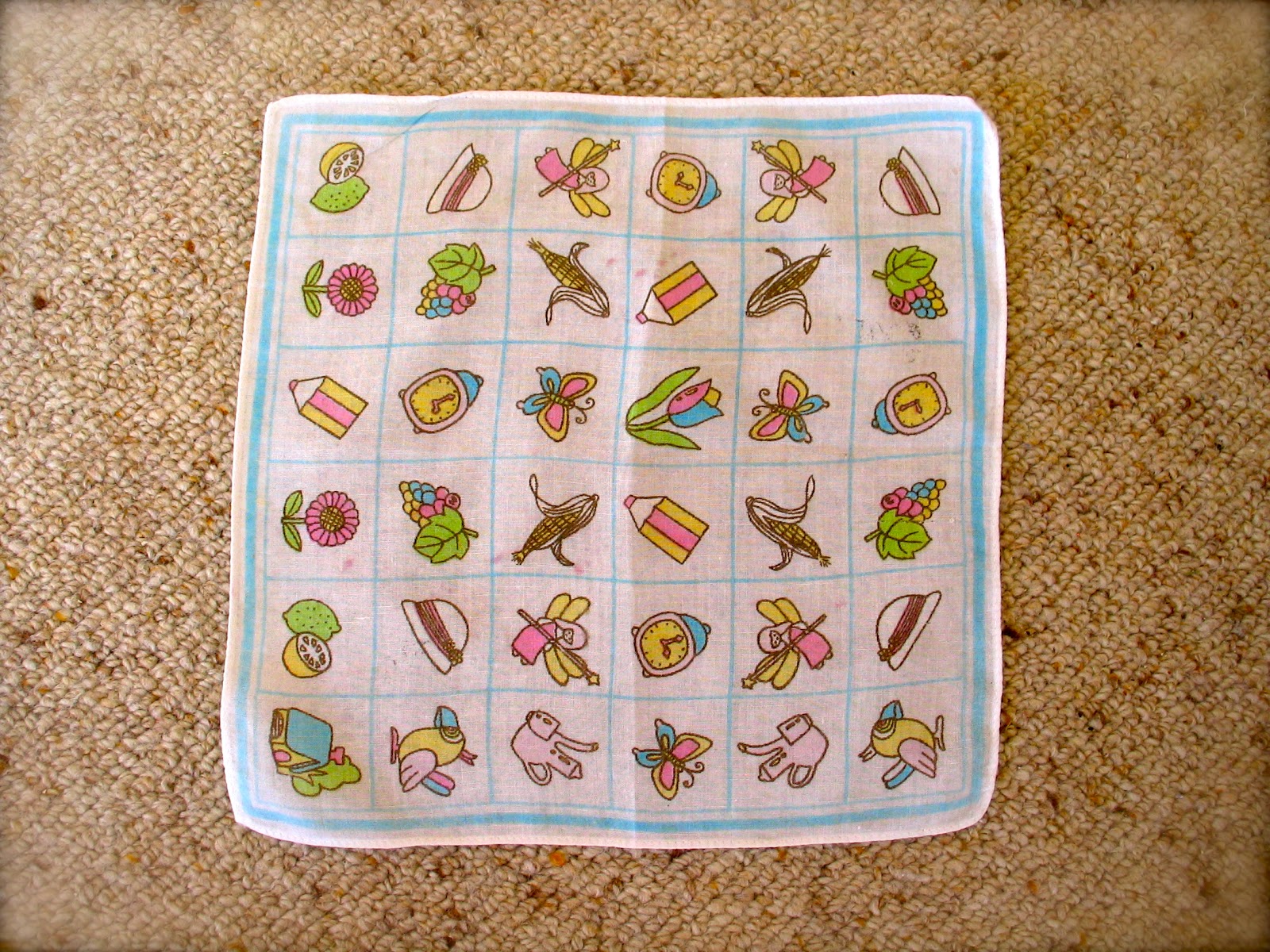
So where can you get a cute hanky to show off that you mean business?  I’ve found an Australian shop that sells gorgeous printed hankies online (as well as a whole lot of other cute accessories).  This one is called the “Cute things” print – can you see why?
Click on the picture to go to the website.
Here are some other cuties:
I hope this has inspired you to get out your Nana’s hankies and save the environment one tissue at a time!